


XATP 2025 Ultra Light Running Poles
October 19, 2025
 0574-65288269
 sales@ningbocomo.com


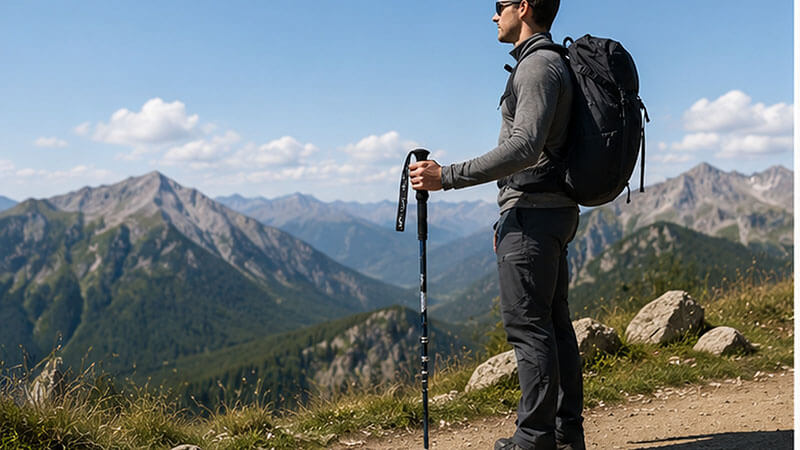
Using Trekking Poles correctly involves more than holding the Grips while walking. The Working Length, Wrist Strap position, walking rhythm, and Pole Tip placement should all match the terrain.
A correct setup allows the poles to move naturally with the body instead of interrupting each step.
On level ground, adjust the poles until the elbows form an angle close to 90 degrees while the shoulders remain relaxed.
| Terrain | Recommended Adjustment |
|---|---|
| Level ground | Keep the elbows close to 90 degrees |
| Uphill | Shorten by about 5–10 cm |
| Downhill | Lengthen by about 5–10 cm |
| Side slope | Use different lengths on each side |
When crossing a side slope, shorten the uphill-side pole and lengthen the downhill-side pole. Never extend the shaft beyond the marked safe adjustment range.
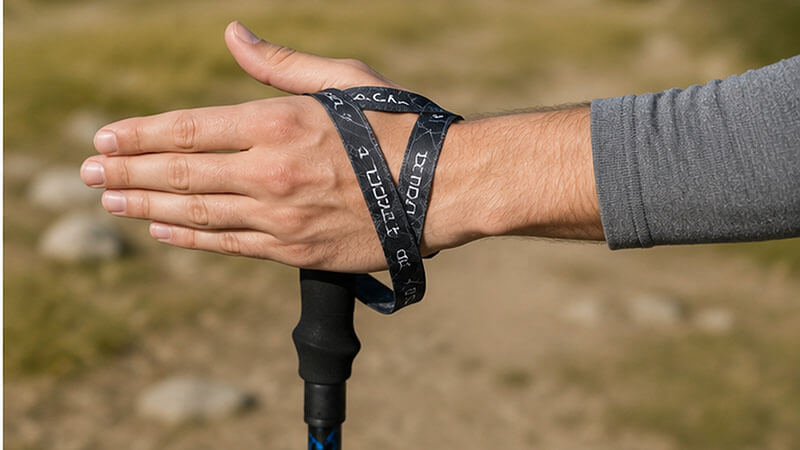
Insert the hand upward through the Wrist Strap, then hold the Grip. The strap should pass beneath the palm and support the wrist naturally.
This reduces the need to squeeze the Grip tightly and allows part of the load to transfer through the strap.
The Wrist Strap should feel secure without restricting circulation. Adjust both sides before walking.
On level ground, use an alternating walking rhythm:
Avoid planting the poles too far ahead, as this can slow the walking rhythm and create unnecessary upper-body movement.
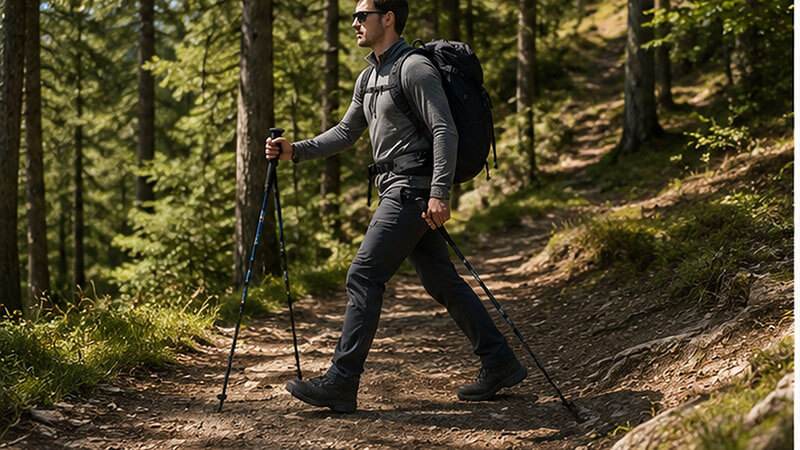
For more guidance on step coordination and pole placement, read How to Walk with Trekking Poles.
Use a natural alternating rhythm and keep the poles close to the body. The Pole Tips should contact the ground without excessive pressure.
Shorten the poles and plant them closer to the feet. On steeper sections, both poles can be placed ahead before stepping upward.
A Long EVA Foam Grip or Extended Grip also allows the hands to move lower without changing the shaft length.
Lengthen the poles slightly and plant them ahead of the body. This provides earlier ground contact and helps control each step.
Avoid reaching so far forward that the shoulders rise or the upper body leans excessively.
Place both poles securely before stepping up or down. Confirm that the Pole Tips are stable before transferring body weight.
Use the Pole Tip to test the ground before stepping. In snow, install a suitable Basket to reduce excessive sinking.
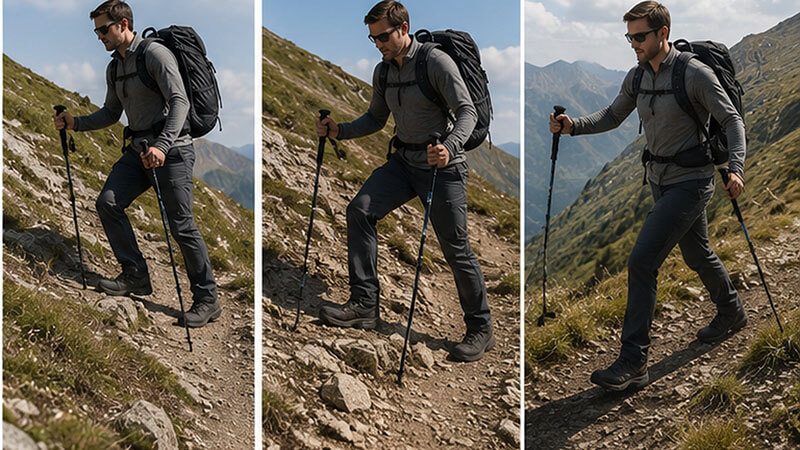
Common trekking pole mistakes include:
Make small adjustments until the arms, shoulders, and walking rhythm feel natural.
Before starting the route, inspect:
Adjustable sections should not slide under pressure, and folding sections should be fully connected before use.
Use the Tip Pad on suitable hard surfaces. Remove it when direct Pole Tip contact is required on natural terrain.
Telescopic Trekking Poles are suitable for general hiking and routes that require frequent Working Length adjustment.
Folding Trekking Poles are useful for travel, compact storage, and quick deployment.
Fixed-Length Folding Trekking Poles suit users who already know their preferred length and prioritize a lightweight structure.
Adjustable-Length Folding Trekking Poles combine compact storage with limited length adjustment for changing terrain.
XATP provides OEM and ODM support for Telescopic and Folding Trekking Poles.
Available options include aluminum and carbon fiber shafts, Grip and Wrist Strap development, Locking System selection, Basket and Pole Tip configuration, sample production, color and logo customization, packaging development, quality inspection, and bulk production.
Outdoor brands and professional buyers can review XATP’s Custom Trekking Pole OEM and ODM Services for additional project information.
Correct trekking pole use depends on suitable Working Length, relaxed shoulders, proper Wrist Strap positioning, natural walking rhythm, and stable Pole Tip placement.
Adjust the poles for uphill, downhill, and side-slope terrain, and inspect the Locking System and shaft sections before each hike.
Manufacturing, R&D and production support for global trekking pole projects.


