


XATP 2025 Ultra Light Running Poles
October 19, 2025
 0574-65288269
 sales@ningbocomo.com


You do not need Trekking Poles for every walk. They are most useful when the route is steep, uneven, slippery, long, or requires additional balance while carrying a backpack.
For short walks on flat, well-maintained paths, trekking poles are usually optional.
| Hiking Situation | Recommendation |
|---|---|
| Short, flat trail | Optional |
| Long-distance hiking | Recommended |
| Steep uphill or downhill | Recommended |
| Rocky, muddy, or uneven terrain | Recommended |
| Heavy backpack | Recommended |
| Snow or shallow-water crossing | Recommended |
| Urban or maintained path | Usually optional |
Trekking poles add contact points with the ground and can provide useful support on loose gravel, rocks, mud, roots, snow, and uneven mountain trails.
They are particularly practical when:
On descents, poles allow earlier ground contact and can help control each step. During climbs, they can support a steady walking rhythm without requiring an excessively long stride.
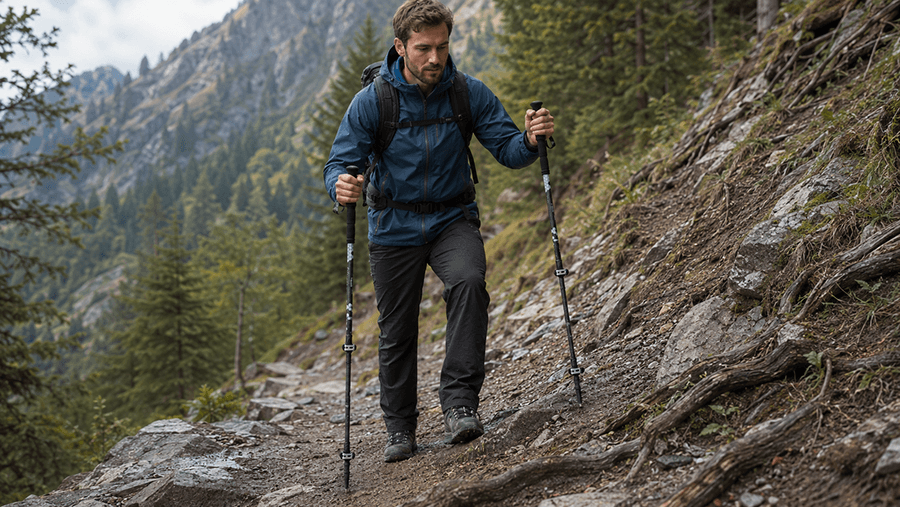
Trekking poles may not be necessary for:
Some hikers also prefer to keep their hands free. Compact Folding Trekking Poles can be stored inside or attached to a backpack and used only when the terrain becomes more demanding.
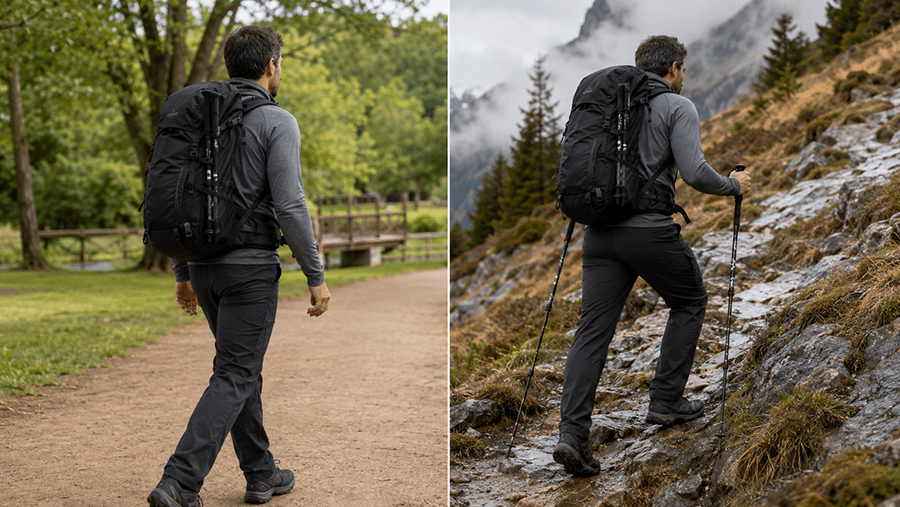
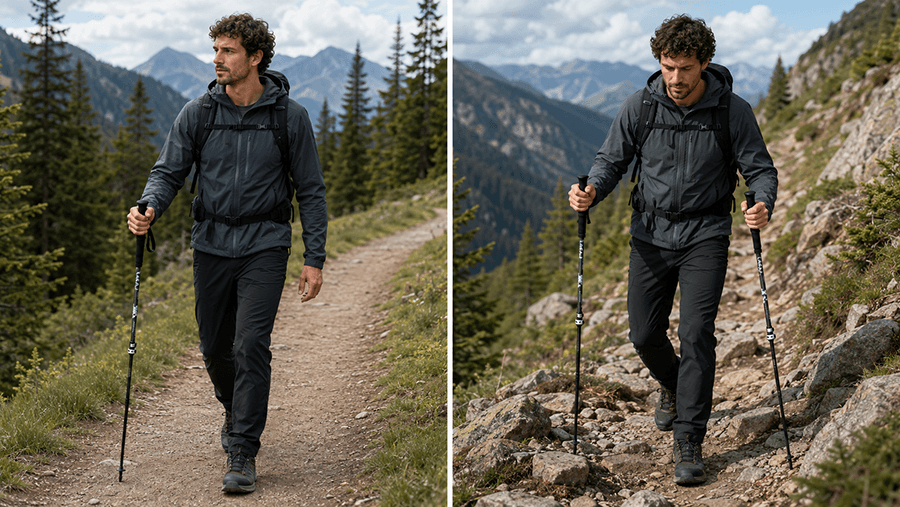
One trekking pole is suitable for occasional support, checking shallow water, or keeping one hand free.
Two trekking poles are generally more suitable for long-distance hiking, backpacking, steep terrain, and uneven trails because they provide balanced support on both sides.
Beginners can use trekking poles, but correct adjustment and technique are important.
Before walking, check:
On level ground, the elbow should normally remain close to 90 degrees while the shoulder stays relaxed.
Beginners can also read How to Walk with Trekking Poles for guidance on Working Length, Wrist Strap use, walking rhythm, and terrain adjustment.
Trekking poles also have practical limitations:
For this reason, the decision should be based on the route rather than treating trekking poles as essential equipment for every walk.
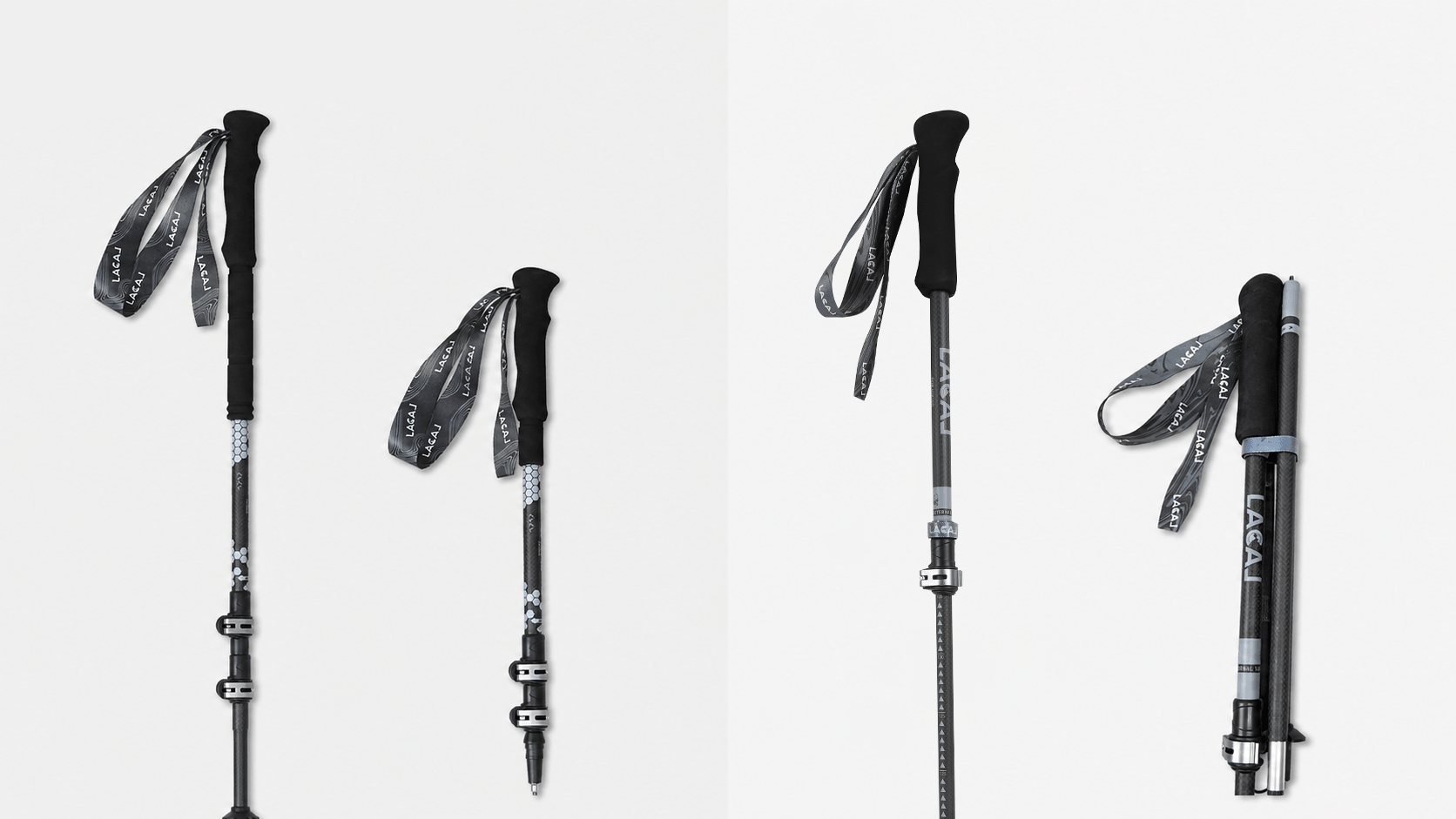
Telescopic Trekking Poles are suitable for general hiking, different users, and frequent Working Length adjustment.
Folding Trekking Poles are useful for travel, compact storage, trail running, and carrying inside a backpack.
Fixed-Length Folding Trekking Poles suit users who already know their preferred Working Length and value a lightweight, quick-deployment structure.
Adjustable-Length Folding Trekking Poles combine compact storage with limited length adjustment for changing terrain.
Before choosing trekking poles, consider:
The lightest or least expensive option is not always the most suitable. The structure and configuration should match the expected route.
Outdoor brands, importers, distributors, and retailers should define the target user, main terrain, Working Length range, Packed Length, shaft material, Grip configuration, Basket package, Tip Pad, Storage Bag, and backpack compatibility.
Different markets and sales channels may require different trekking pole structures rather than one specification for every user.
XATP provides OEM and ODM support for Telescopic and Folding Trekking Poles.
Available support includes aluminum and carbon fiber shafts, Grip and Wrist Strap development, Locking System selection, Basket and Pole Tip configuration, sample production, color and logo customization, packaging development, quality inspection, and bulk production.
Outdoor brands and professional buyers can review XATP’s Custom Trekking Pole OEM and ODM Services for additional project information.
Trekking poles are optional for short, flat, and easy walks. They become more useful as the distance, terrain difficulty, backpack weight, and need for stability increase.
For steep, uneven, slippery, snowy, or long-distance routes, carrying one or two trekking poles is usually a practical choice.
Manufacturing, R&D and production support for global trekking pole projects.


