


XATP 2025 Ultra Light Running Poles
October 19, 2025
 0574-65288269
 sales@ningbocomo.com


Trekking poles can improve balance, stability, and walking rhythm when adjusted and used correctly.
Set the correct length, coordinate each pole with the opposite foot, keep a relaxed grip, and adapt the poles to different terrain.
On flat ground, adjust the poles so your elbows form an angle of about 90 degrees. Raised shoulders usually mean the poles are too long, while forward leaning may mean they are too short.
For more sizing guidance, read what size trekking pole do I need.
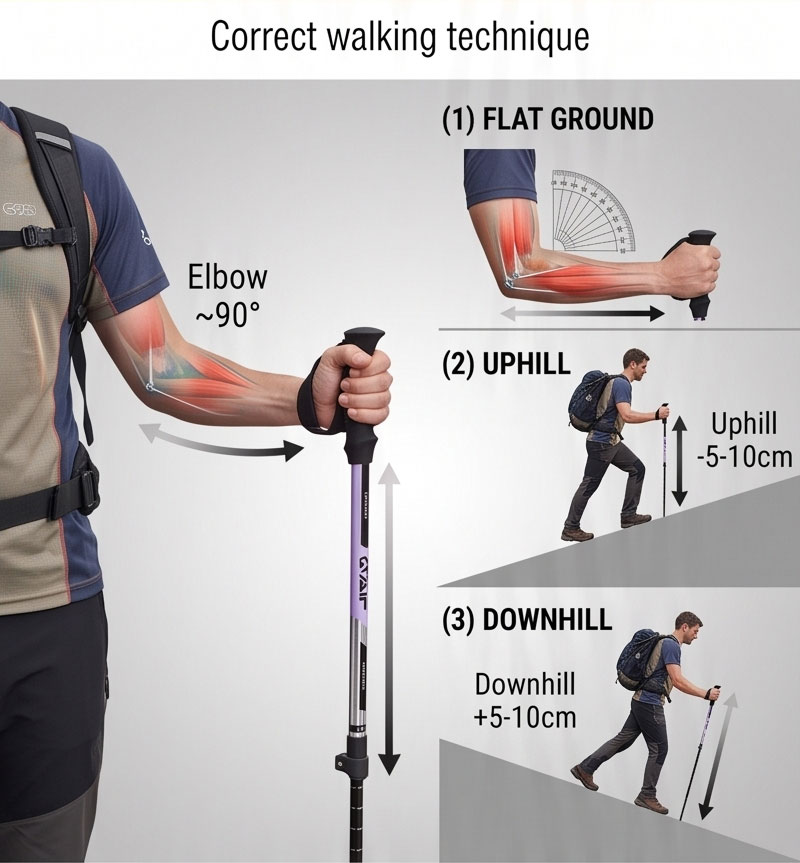
Insert your hand upward through the wrist strap from below, then lower your hand onto the grip. Keep the grip relaxed so the strap supports the base of the hand.
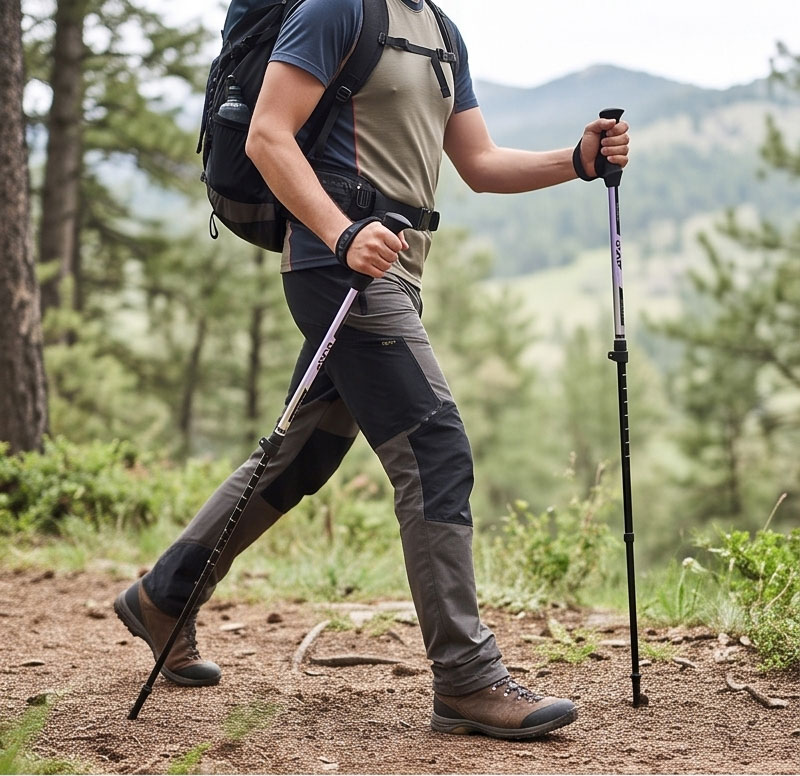
Move the left pole with the right foot and the right pole with the left foot. Plant the pole tip near the opposite foot or slightly behind it.
Shorten the poles by about 5-10 cm uphill. Lengthen them by about 5-10 cm downhill and place the tips ahead before stepping.
On a side slope, shorten the uphill pole and lengthen the downhill pole. In mud or snow, use suitable baskets.
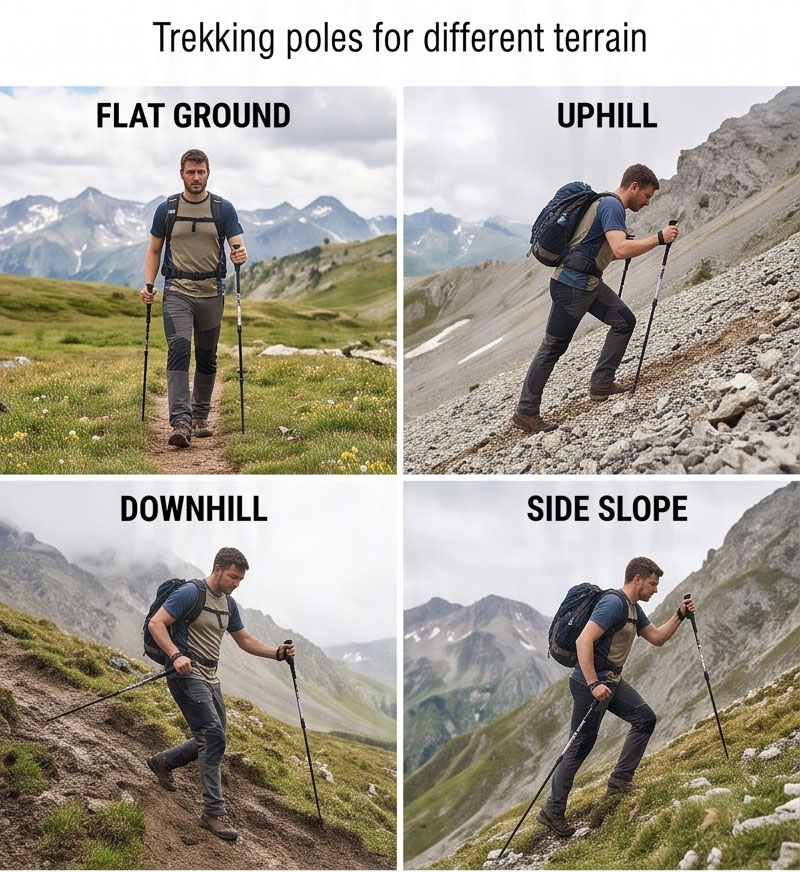
| Terrain | Adjustment | Technique |
|---|---|---|
| Flat ground | Elbows near 90 degrees | Use opposite-arm movement |
| Uphill | Shorten 5-10 cm | Push down and backward |
| Downhill | Lengthen 5-10 cm | Place tips ahead before stepping |
| Side slope | Adjust both poles | Shorten uphill and lengthen downhill |
| Mud or snow | Use suitable baskets | Reduce sinking |
Aluminum poles balance durability and cost. Carbon fiber poles can reduce weight and vibration for long-distance trekking.
Telescopic poles offer a wide adjustment range, while folding poles provide a shorter packed length.
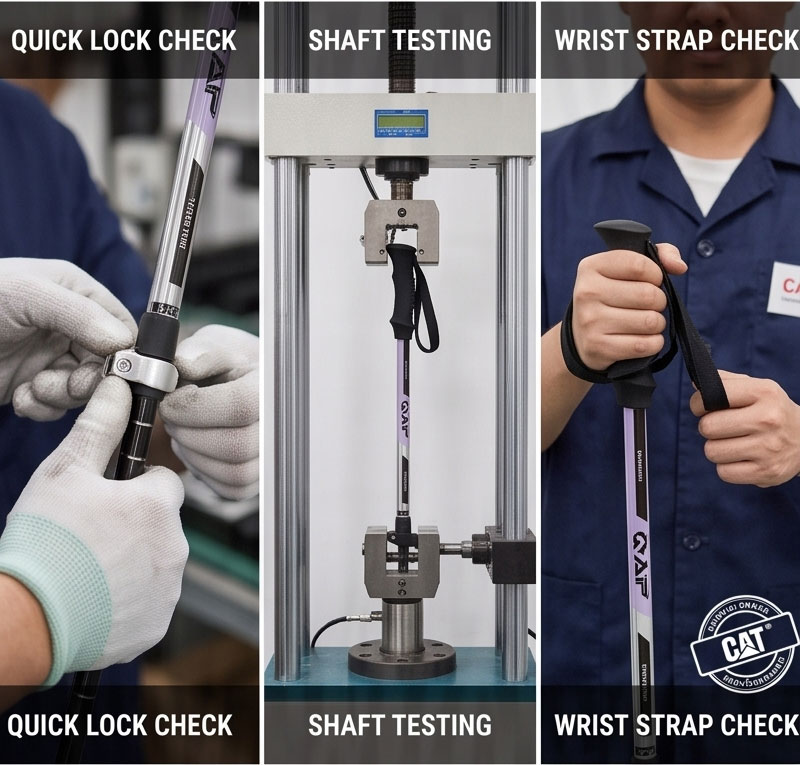
OEM projects may begin with a design, drawing, approved sample, specification, or packaging design. ODM projects may begin with a product concept, market, function, or target price.
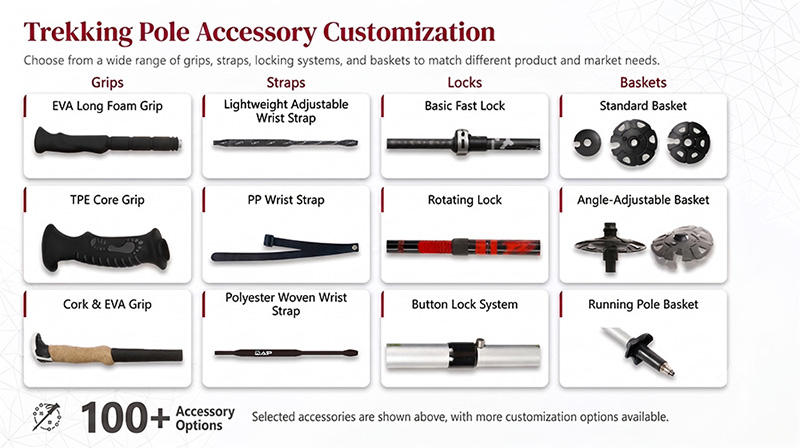
Learn more about custom trekking pole OEM and ODM services. XATP supports design, samples, testing, production, inspection, and packaging.
Correct technique requires suitable length, opposite-arm movement, a relaxed grip, proper wrist strap use, and terrain-specific adjustment.
Established in 2000, XATP is an outdoor equipment manufacturer with production facilities in China and Cambodia.
XATP provides OEM and ODM solutions covering tube processing, carbon fiber production, injection molding, printing, assembly, inspection, and packaging.


