


XATP 2025 Ultra Light Running Poles
October 19, 2025
 0574-65288269
 sales@ningbocomo.com


Trekking poles can be worthwhile for hikers who regularly walk on uneven terrain, steep slopes, mud, snow, or long-distance routes. They add extra contact points with the ground and can help users maintain balance, control movement, and adapt to changing trail conditions.
However, trekking poles are not essential for every walk. Their value depends on the terrain, frequency of use, walking technique, product weight, packed length, Locking System, and overall product quality.
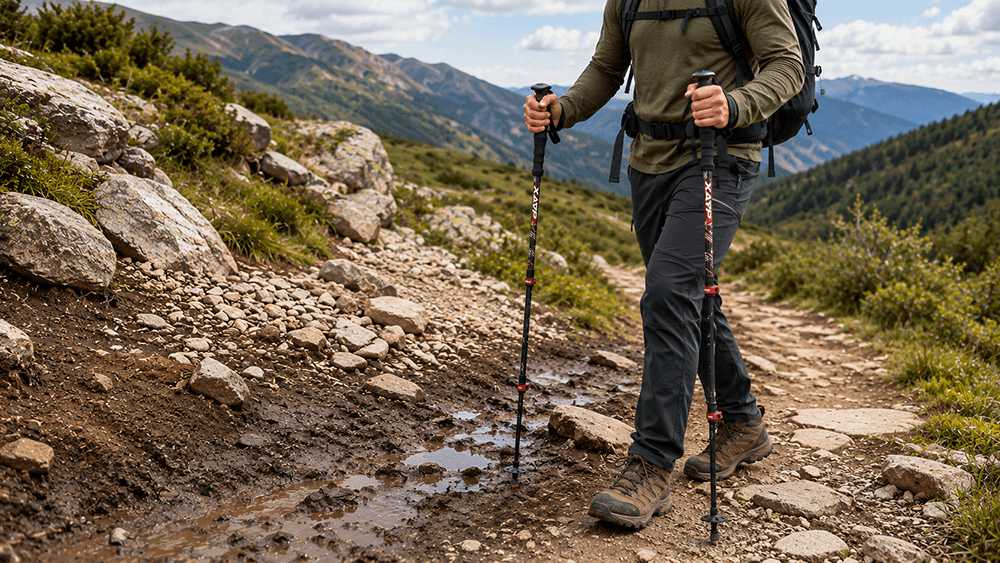
Better balance on uneven terrain: Trekking poles provide additional ground contact on rocky paths, loose gravel, mud, snow, stream crossings, and side slopes. They can also help users check uncertain ground before taking the next step.
Trekking poles do not completely prevent falls. Correct pole length, suitable Pole Tip placement, reliable locking performance, and proper technique remain important.
More control on slopes: On uphill terrain, adjustable trekking poles are often shortened to support forward movement while keeping the arms in a natural position.
On downhill terrain, they are generally lengthened. Placing the Pole Tips ahead of the body creates earlier ground contact before the next step. A reliable Locking System is essential because a pole that slips or changes length may reduce stability.
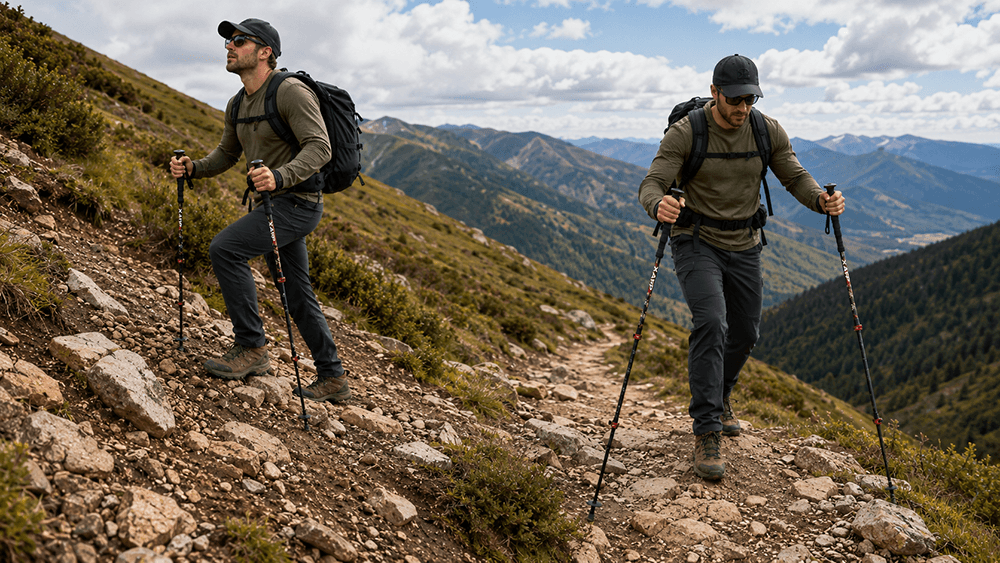
A more consistent walking rhythm: Trekking poles can follow a natural opposite-arm pattern. The left pole moves with the right foot, while the right pole moves with the left foot.
Users should keep the Grip relaxed and allow the Wrist Strap to support the base of the hand instead of squeezing the handle continuously. Correct adjustment and placement are explained in more detail in this guide on how to walk with trekking poles.
Trekking poles are particularly useful for mountain hiking, long-distance trekking, backpacking, steep ascents and descents, loose terrain, mud, and snow.
For frequent users, Grip comfort, total weight, locking stability, and packed length become increasingly important.
Trekking poles may provide less value on short, flat, and stable walking routes. They can also be inconvenient when users need both hands for photography, climbing, navigation, or other equipment.
Heavy poles, uncomfortable Grips, long packed dimensions, unreliable locks, or incorrect technique may create more inconvenience than benefit. Their value therefore depends on both the product and the way it is used.
Trekking poles can generally be divided into Telescopic Trekking Poles and Folding Trekking Poles.
External Lock Trekking Poles use visible Flip Locks. They are quick to adjust and make the locking mechanism easy to inspect. Buyers should check the clamp design, screw setting, tube tolerance, and locking stability.
Internal Lock Trekking Poles normally use a Twist Lock or another internal expansion mechanism. They provide a cleaner shaft exterior, but performance depends on internal components, tube dimensions, and assembly accuracy.
Fixed-Length Folding Trekking Poles use connected folding sections and have a predetermined working length without an additional adjustment section.
Adjustable-Length Folding Trekking Poles combine folding lower sections with an adjustable upper shaft. They provide compact storage and greater sizing flexibility, but include more components that require inspection.
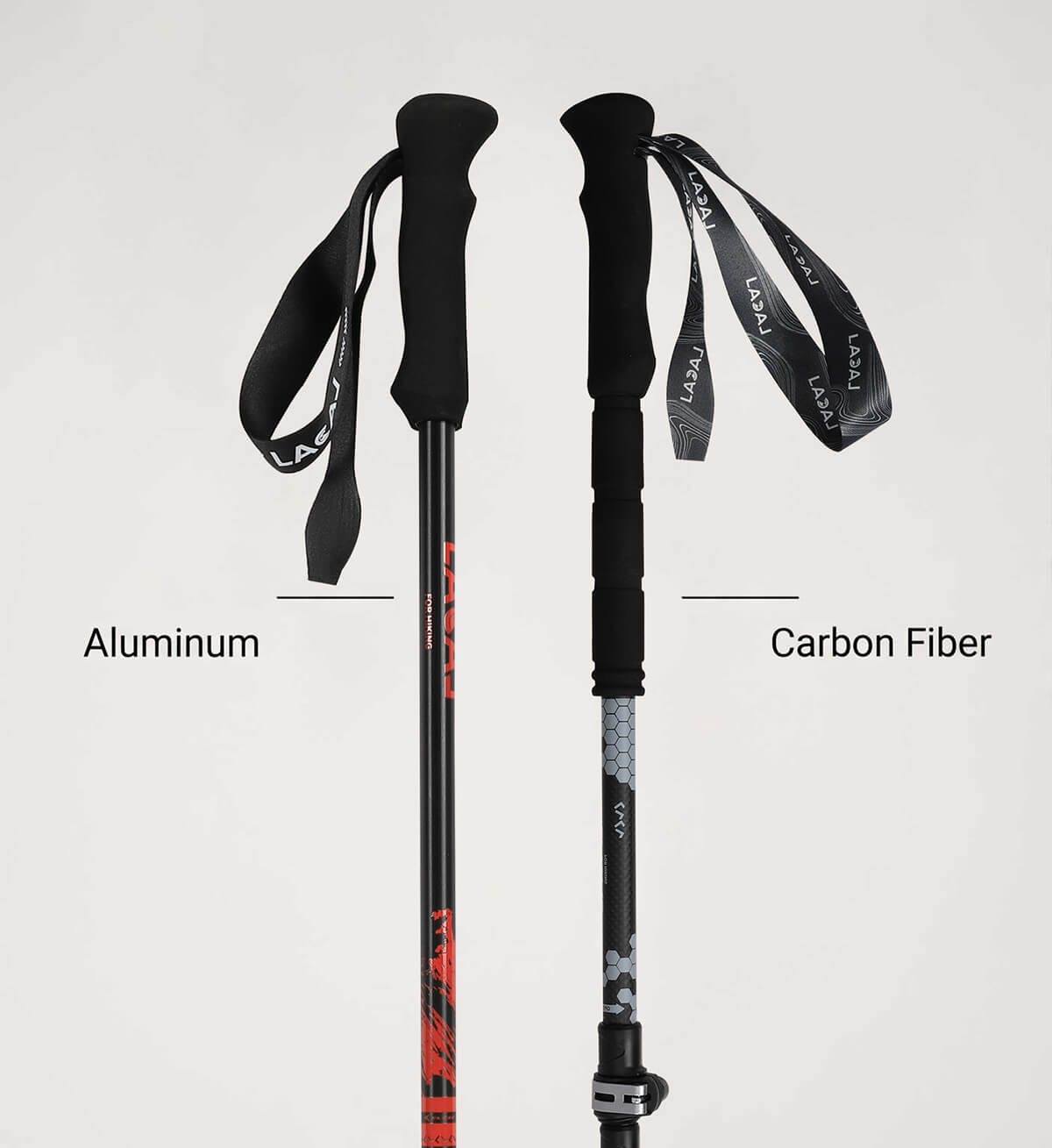
Aluminum is commonly selected for durable and cost-controlled trekking poles. Carbon Fiber is often used for lightweight and premium product ranges.
Neither material automatically provides better value. The finished product should also be evaluated according to tube diameter, wall thickness, shaft construction, connection areas, Locking System, total weight, intended terrain, and target price.
A well-designed Aluminum pole may offer practical value for general hiking, while Carbon Fiber may be more suitable for users who prioritize lower weight.
The lightest or most expensive product is not automatically the best choice. A trekking pole is worthwhile when its structure and components match the user’s activity and storage requirements.
Outdoor brands, importers, distributors, and retailers should define the Target Market, Intended Users, Primary Terrain, pole structure, Shaft Material, working and packed length, target weight, target price, Grip, Wrist Strap, accessories, logo, packaging, and Estimated Order Quantity.
The final specification should support the intended retail price, sales channel, and market positioning.
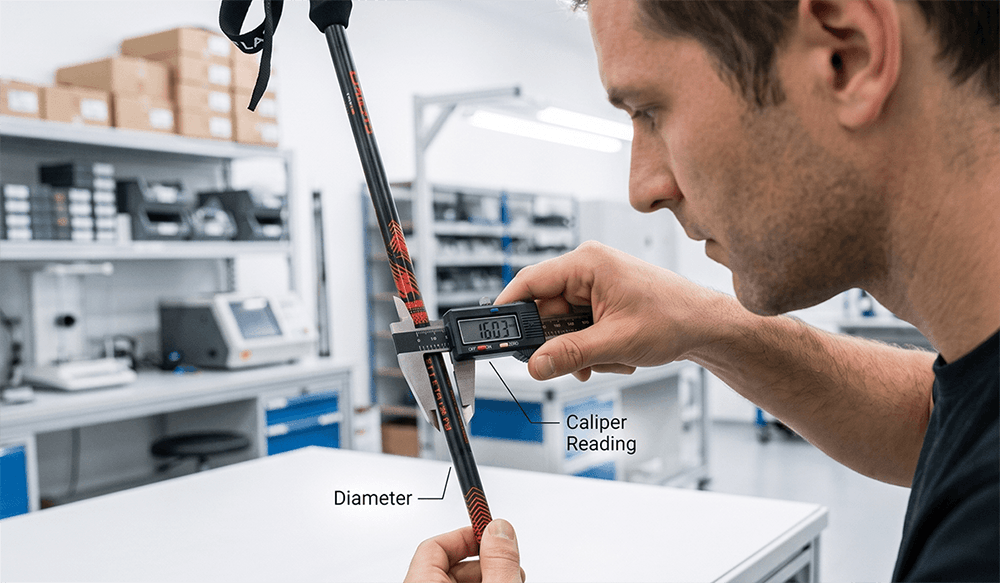
Quality inspection may include locking stability, repeated lock operation, shaft dimensions, Grip bonding, Wrist Strap stitching, folding joint stability, Basket installation, Pole Tip assembly, Tip Pad fit, printing, and packaging.
Testing methods, loading conditions, repeated cycles, and acceptance limits should be confirmed before mass production.
XATP provides OEM and ODM support for outdoor brands, importers, distributors, retailers, and private-label buyers.
OEM projects may begin with an approved design, sample, specification, logo, or packaging design. ODM projects may begin with a Target Market, reference product, functional requirement, material preference, target price, and Estimated Order Quantity.
XATP supports material selection, structure planning, sample development, aluminum tube processing, carbon fiber production, injection molding, printing, assembly, quality inspection, and packaging. Buyers planning a private-label product range can review XATP’s custom trekking pole OEM and ODM services.
Trekking poles can be worth buying for users who regularly hike on uneven, steep, loose, or slippery terrain. Their value depends on correct use and whether the structure, material, weight, Locking System, and packed length match the activity.
For B2B buyers, product value also depends on target cost, market positioning, testing requirements, and production consistency.
Established in 2000, XATP is an outdoor equipment manufacturer with production facilities in China and Cambodia.
XATP provides OEM and ODM solutions covering aluminum tube processing, carbon fiber production, injection molding, hardware processing, printing, assembly, quality inspection, and packaging.


