


XATP 2025 Ultra Light Running Poles
October 19, 2025
 0574-65288269
 sales@ningbocomo.com


Trekking poles are handheld outdoor support tools used for hiking, trekking, backpacking, and walking on uneven terrain. They add extra contact points with the ground, helping users maintain balance and movement across changing slopes.
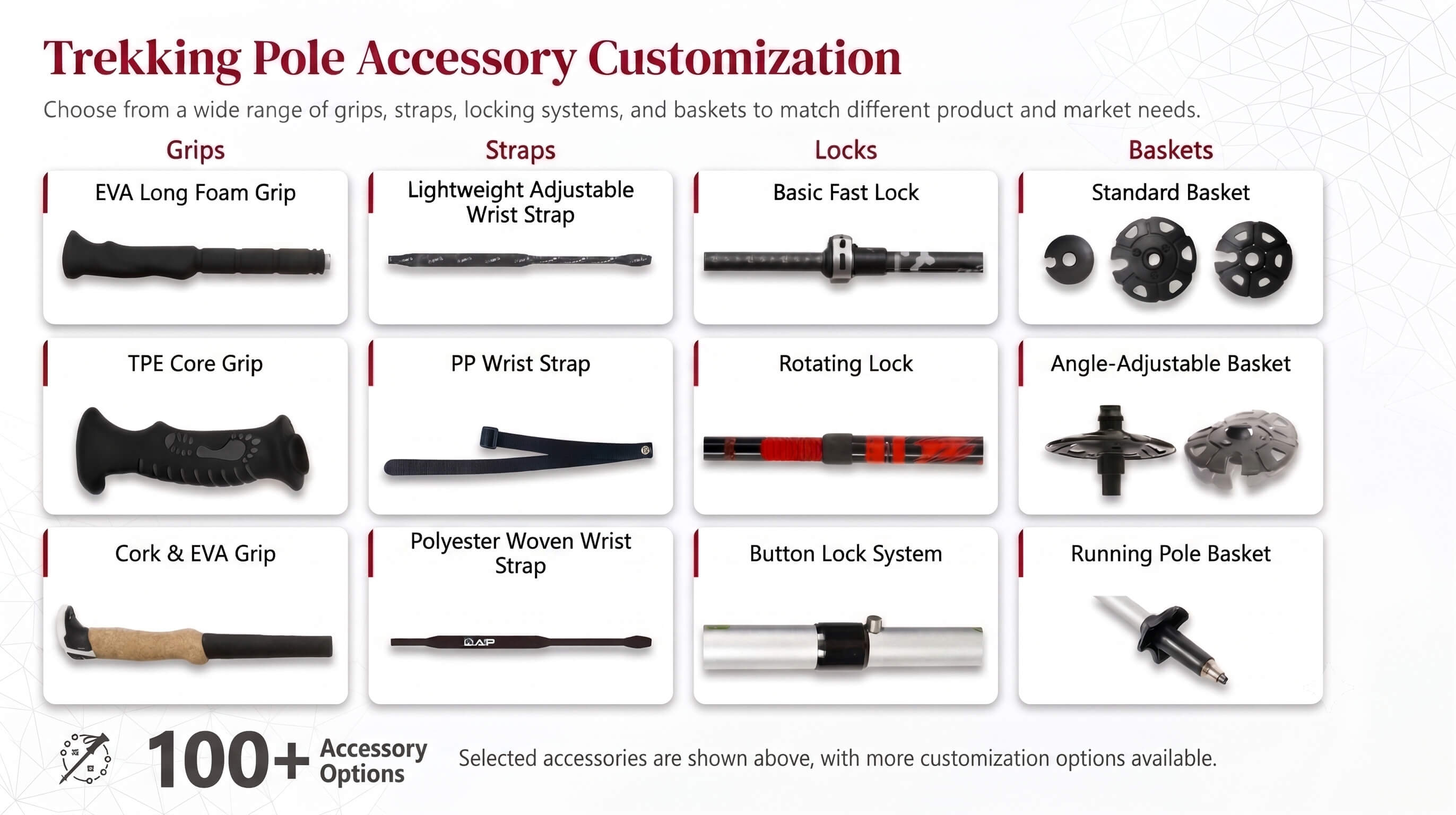
Their performance depends on the Grip, Wrist Strap, Locking System, Shaft Material, Basket, Pole Tip, Tip Pad, and overall structure.
Trekking poles can improve ground contact on rocky trails, gravel, mud, snow, and uneven paths. Adjustable poles are often shortened uphill and lengthened downhill.
They can also follow an opposite-arm pattern: the left pole moves with the right foot, while the right pole moves with the left foot. Correct length, reliable locking, suitable tip placement, and proper technique all affect performance. Read more about how to walk with trekking poles.
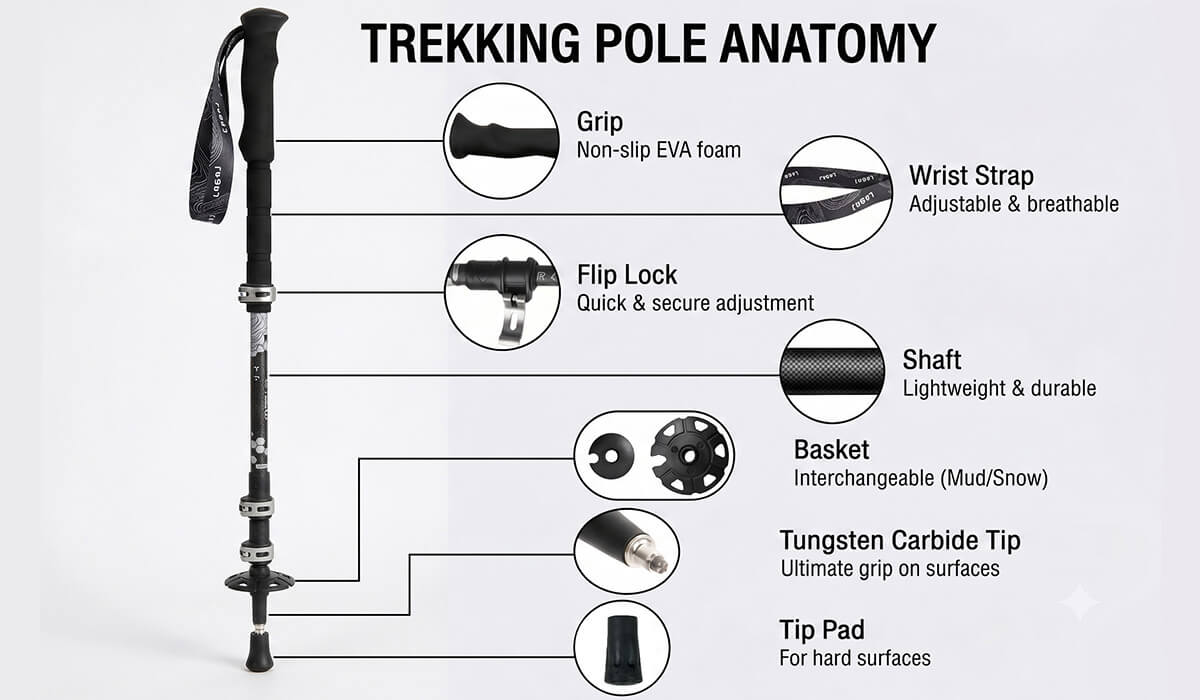
Common Grip materials include EVA Foam, Natural Cork, and TPE Overmolding. Buyers should review Grip shape, diameter, bonding, and extension length. The Wrist Strap should be comfortable, adjustable, and securely stitched.
The Locking System controls shaft adjustment or secures a folding structure. Common options include Flip Lock, Twist Lock, Push-Button Folding System, Buttonless Folding System, and One-Pull Locking System.
Common shaft materials include 6061 Aluminum, 7075 Aluminum, and Carbon Fiber. The Basket reduces sinking on soft ground, the Tungsten Carbide Tip contacts dirt, gravel, and rock, and the Tip Pad covers the tip on hard surfaces or during transport.
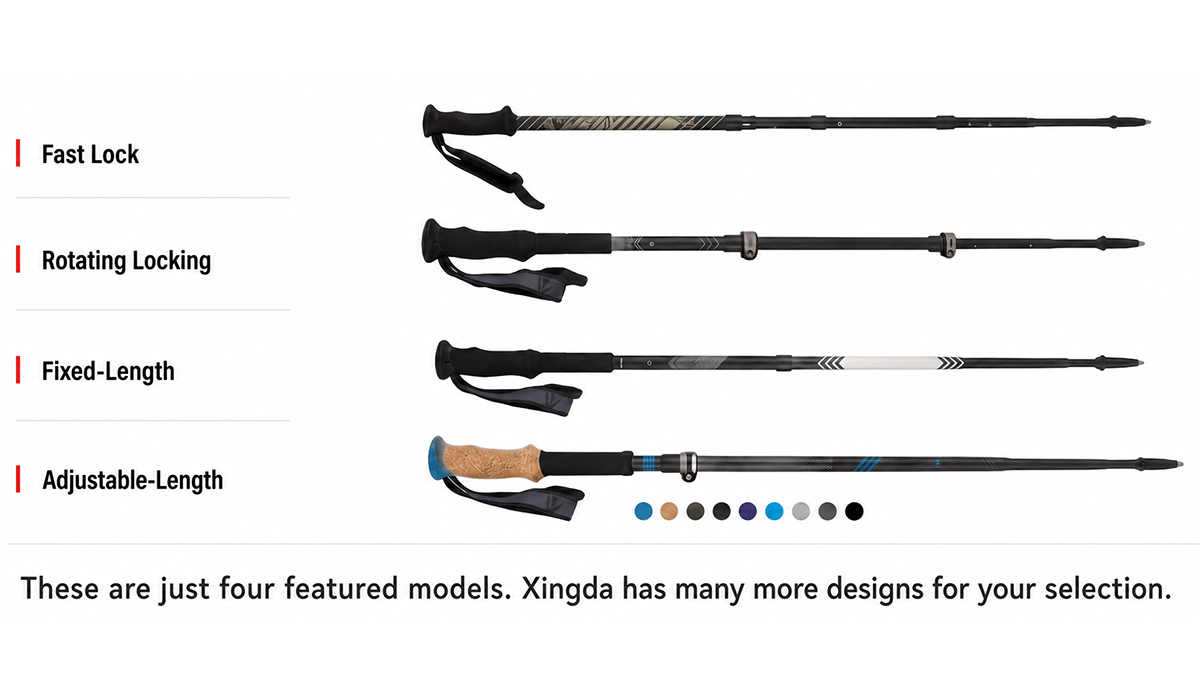
Trekking poles can be divided into Telescopic Trekking Poles and Folding Trekking Poles.
External Lock Trekking Poles use a visible Flip Lock. Buyers should check the clamp design, tube tolerance, screw adjustment, and locking stability.
Internal Lock Trekking Poles normally use a Twist Lock or internal expansion mechanism. Performance depends on the internal components, tube dimensions, tightening method, and assembly accuracy.
Fixed-Length Folding Trekking Poles use connected folding sections and have a predetermined working length.
Adjustable-Length Folding Trekking Poles combine folding lower sections with an adjustable upper shaft. Both the folding joints and the upper locking section should be tested.
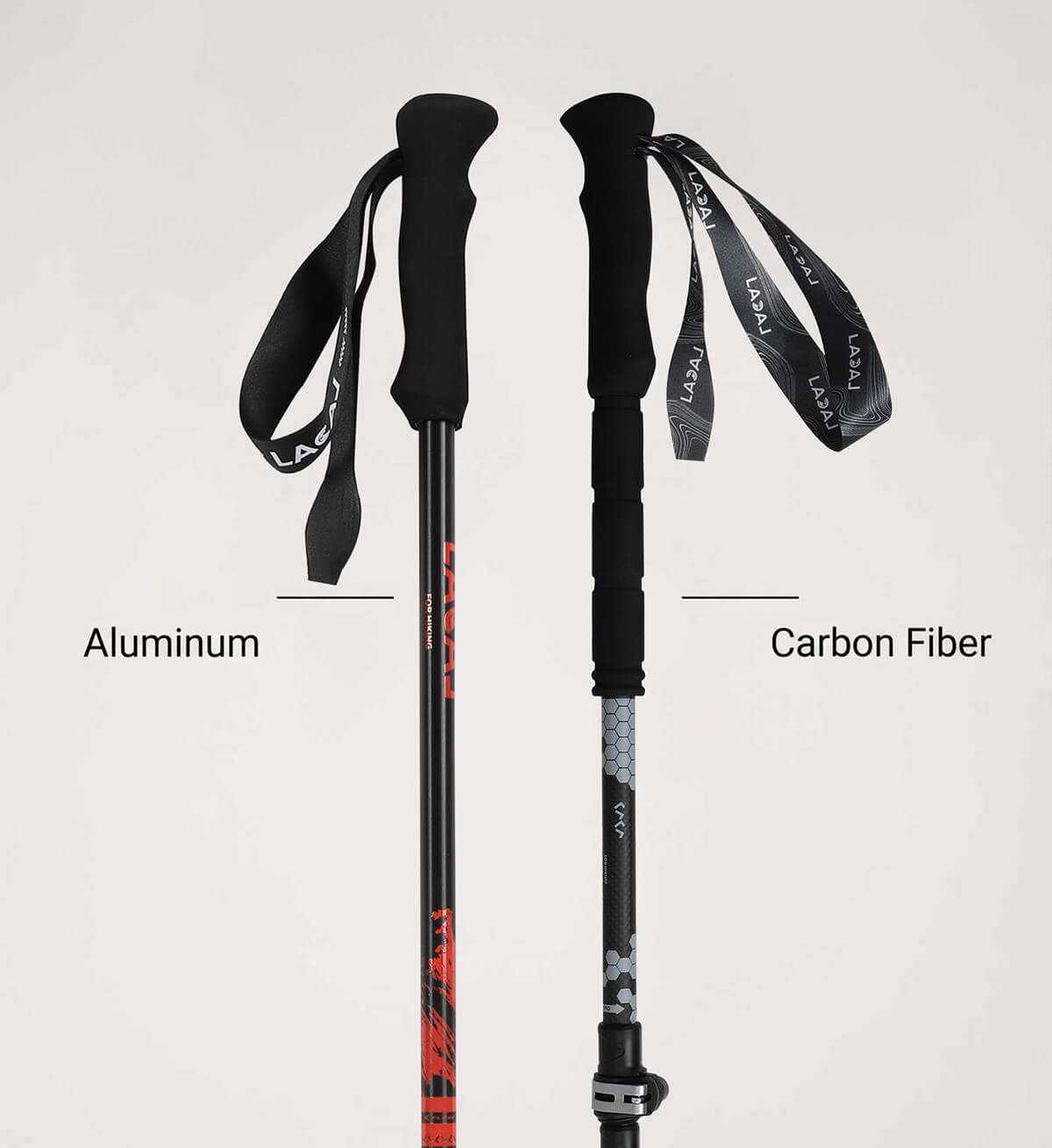
Aluminum is commonly selected for durable and cost-controlled products. Carbon Fiber is often selected for lower-weight and premium products.
Actual performance depends on tube construction, shaft design, locking structure, connection areas, and total weight rather than the material name alone.
Consumers should consider intended use, height, terrain, Adjustable Length, Folding or Collapsed Length, weight, Shaft Material, Grip comfort, Locking System, and accessories.
A trekking pole should be selected as a complete product rather than by one material or weight claim.
Buyers should define the target market, intended users, pole structure, Shaft Material, working and packed length, target weight and price, Locking System, accessories, logo, packaging, and estimated order quantity.
The specification should match the intended user, retail price, and sales channel.
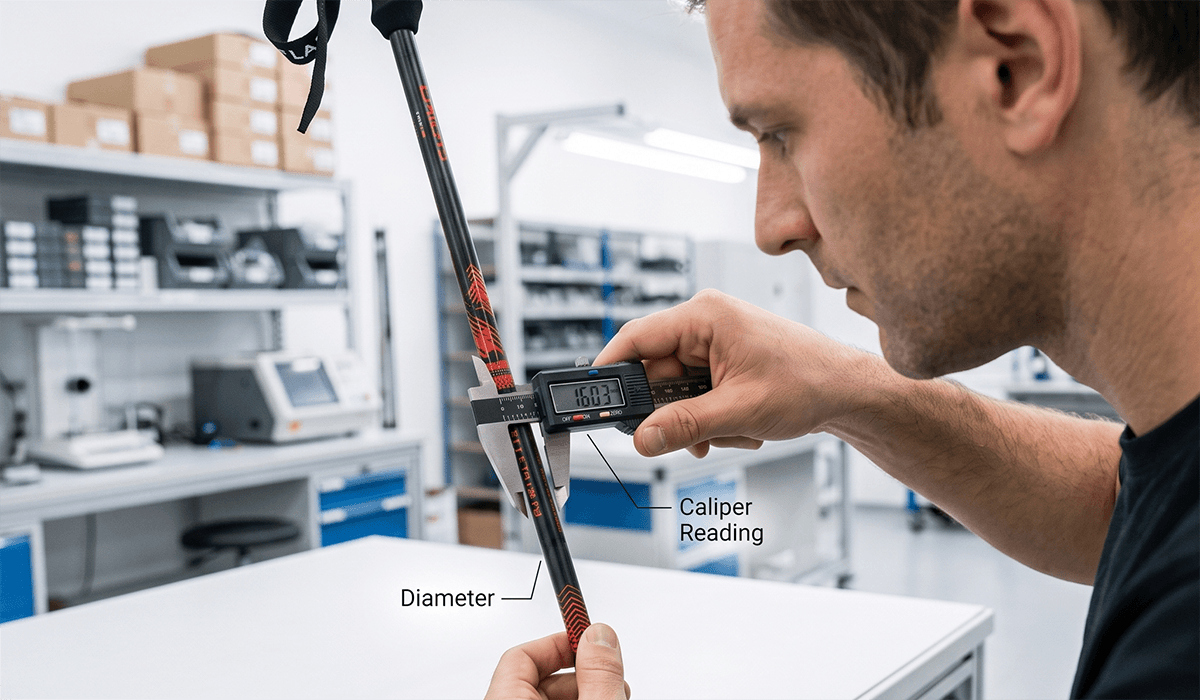
Inspection may include locking stability, shaft dimensions, Grip bonding, Wrist Strap stitching, Basket installation, Pole Tip assembly, Tip Pad fit, printing, accessories, and packaging.
Depending on the market, testing may also include repeated locking operation, pressure, tensile strength, hardness, low temperature, salt spray, and printing adhesion. Test methods and acceptance limits should be confirmed before production.
XATP provides OEM and ODM support for outdoor brands, importers, distributors, retailers, and private-label buyers.
OEM projects may begin with an approved design, sample, specification, logo, or packaging design. ODM projects may begin with a target market, reference product, function, material preference, price positioning, and estimated order quantity.
XATP supports material selection, structure planning, sample development, production, quality inspection, and packaging. Buyers can review custom trekking pole OEM and ODM services.
A trekking pole is a complete outdoor product system. Consumers should choose according to height, activity, terrain, and storage needs. B2B buyers should also evaluate materials, structure, testing, cost, and production consistency.
Established in 2000, XATP is an outdoor equipment manufacturer with production facilities in China and Cambodia. It provides OEM and ODM solutions covering tube processing, carbon fiber production, injection molding, printing, assembly, quality inspection, and packaging.


