


XATP 2025 Ultra Light Running Poles
October 19, 2025
 0574-65288269
 sales@ningbocomo.com


Yes, you can generally travel with Trekking Poles, but whether you can take them in your carry-on luggage depends on the country, airport, airline, and Pole Tip design.
For most travelers, checked baggage is the safest and most predictable option, especially when the poles have pointed or exposed tips. Rules can also differ between departure, transit, destination, and return airports, so it is important to check every part of the journey.
Important: Airport-security and airline rules vary by country and route. Always confirm the requirements of your airline, departure airport, transit airport, destination airport, and return journey before traveling.
There is no single worldwide rule for trekking poles in cabin baggage.
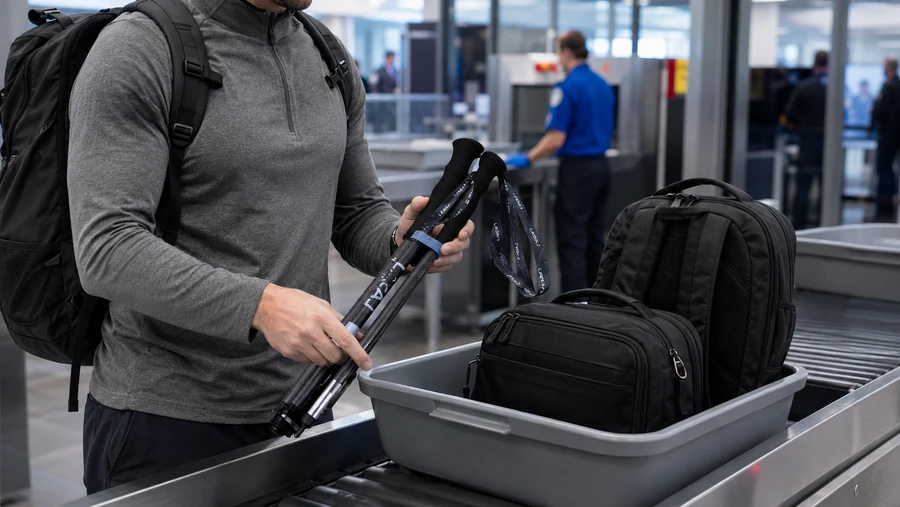
Some airports may permit certain blunt-tipped poles, while poles with pointed tips are more likely to be restricted during security screening. Airlines may also apply additional cabin-baggage limits based on size, equipment type, or local regulations.
Before placing trekking poles in carry-on luggage, check:
A pole accepted at one airport may still be rejected at another.
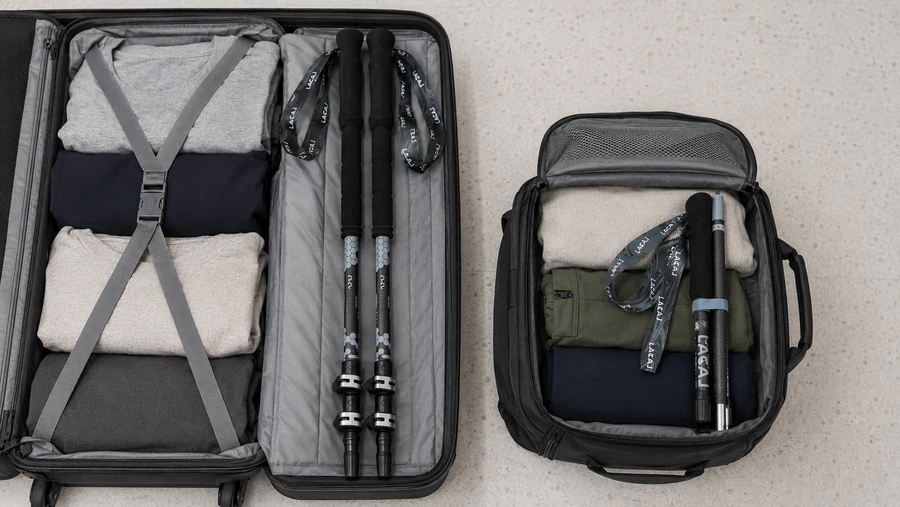
In most cases, checked baggage is the most reliable way to transport trekking poles.
Before checking them:
This helps protect both the trekking poles and surrounding luggage during baggage handling.
Rules differ between countries and airport authorities.
| Region / Situation | Carry-On | Checked Baggage |
|---|---|---|
| United States – blunt-tipped poles | May be permitted | Generally permitted |
| United States – pointed poles | More likely to be restricted | Generally permitted |
| UK airports | Generally restricted | Generally permitted |
| Other countries | Check local rules | Usually the safer option |
| International connections | Check every airport | Recommended when uncertain |
Do not assume that the rules of one country apply worldwide.
This is especially important for international connections. Even if trekking poles are accepted at the departure airport, transit security may apply different requirements.
Published regulations are not identical across countries. Some authorities distinguish between blunt and pointed hiking poles, while others generally require walking or hiking poles to be placed in checked baggage. The airline and airport-security decision for the specific journey remains controlling.
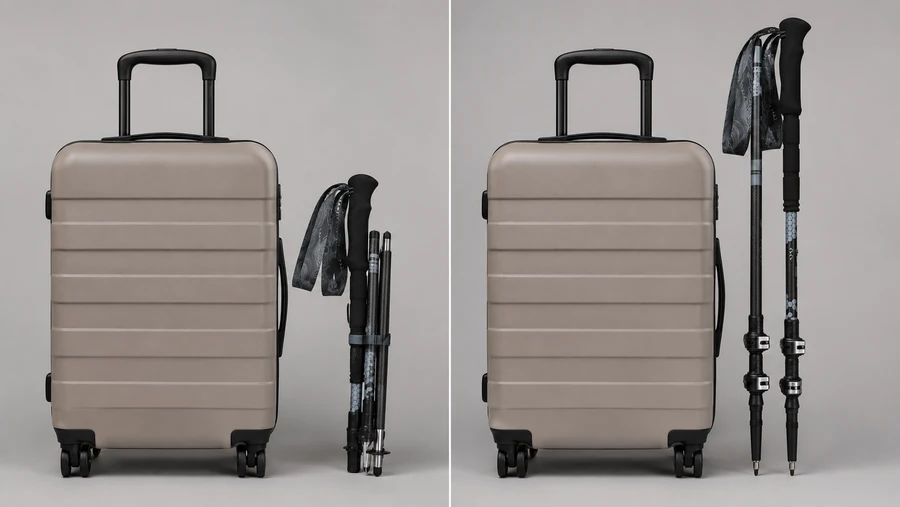
The structure of a trekking pole affects how easily it can be packed, but it does not automatically determine whether it is allowed in cabin baggage.
Folding Trekking Poles usually have a shorter Packed Length and are easier to store inside travel luggage.
Their travel advantages include:
However, a compact folding structure does not automatically make the pole carry-on approved. Pole Tip design and local security rules still apply.
Telescopic Trekking Poles usually have a longer Packed Length.
Before traveling:
Their longer storage length may make them less convenient for smaller bags, but Packed Length alone does not determine security approval.
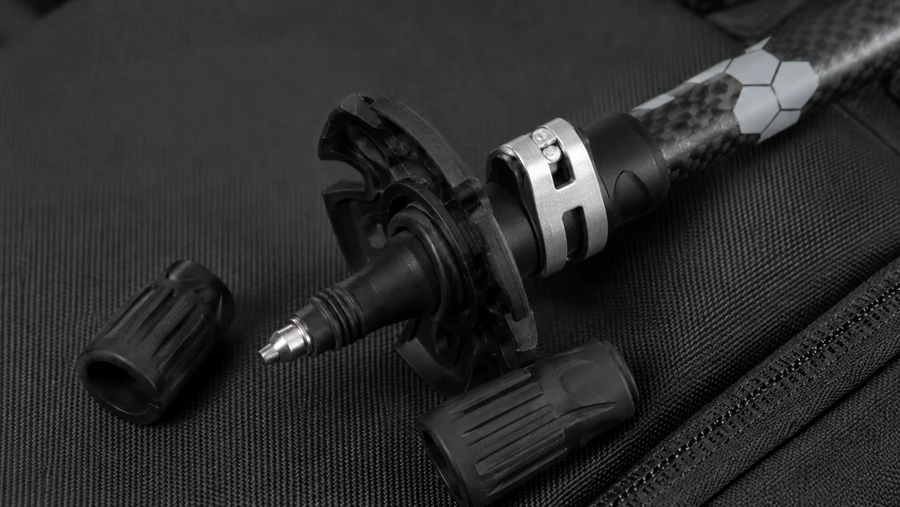
Many trekking poles use Tungsten Carbide Tips because they provide durable ground contact on outdoor terrain.
These tips are hard and often pointed, making them more relevant during airport security screening.
Using a Tip Pad is helpful for protecting the Pole Tip and surrounding luggage, but covering a pointed tip does not necessarily change how airport security classifies the product.
When regulations are unclear, placing pointed trekking poles in checked baggage is usually the lowest-risk option.
Trekking poles should not automatically be treated as medical mobility aids.
Walking aids required for medical or mobility purposes may follow different airport and airline procedures. Travelers who depend on a mobility aid should contact the airline and relevant airports before departure to confirm the applicable process.
This distinction matters because recreational trekking equipment and mobility aids may be handled differently.
Before traveling with trekking poles, confirm:
For international travel, checking only the departure airport is not enough.
If airport security does not allow trekking poles through the checkpoint, possible alternatives may include:
Before discarding valuable trekking poles, ask airport staff whether you can leave the security area and return to check-in.
| Situation | Recommended Approach |
|---|---|
| Pointed Tungsten Carbide Tips | Checked baggage |
| Airport rules are unclear | Checked baggage |
| International connecting flight | Check every airport |
| Compact Folding Trekking Poles | Easier to pack, but rules still apply |
| Telescopic Trekking Poles | Collapse fully before packing |
| Medical walking aid | Confirm special procedures |
| Carry-on only trip | Check airport and airline before departure |
XATP provides OEM and ODM support for Telescopic and Folding Trekking Poles designed for different travel and outdoor applications.
Available project options include:
These options allow outdoor brands, importers, distributors, and retailers to develop trekking poles with compact storage and travel-friendly configurations.
Professional buyers can review XATP’s Custom Trekking Pole OEM and ODM Services for additional project information.
Yes, you can generally travel with trekking poles, but you should not assume they are allowed in carry-on luggage.
Rules vary by country, airport, airline, and Pole Tip design. Folding or shortening the poles makes them easier to pack, but it does not automatically make them cabin-approved.
When the poles have pointed tips or the rules are unclear, checked baggage is usually the safest and most predictable choice.
Manufacturing, R&D and production support for global trekking pole projects.


