


XATP 2025 Ultra Light Running Poles
October 19, 2025
 0574-65288269
 sales@ningbocomo.com


Using Trekking Poles is not complicated. For beginners, the most important things are correct pole length, proper Wrist Strap use, a relaxed Grip, and a natural walking rhythm.
Start on flat, easy terrain. Once the poles begin to move naturally with your steps, you can gradually use them on uphill, downhill, and uneven trails.
Before walking, adjust both poles to a comfortable Working Length.
Stand naturally with relaxed shoulders and hold the Grips without raising or dropping your arms excessively. On level ground, your forearms can provide a practical reference for finding a comfortable starting position.
Different pole structures adjust differently:
The goal is a comfortable, natural position rather than a perfect numerical angle.
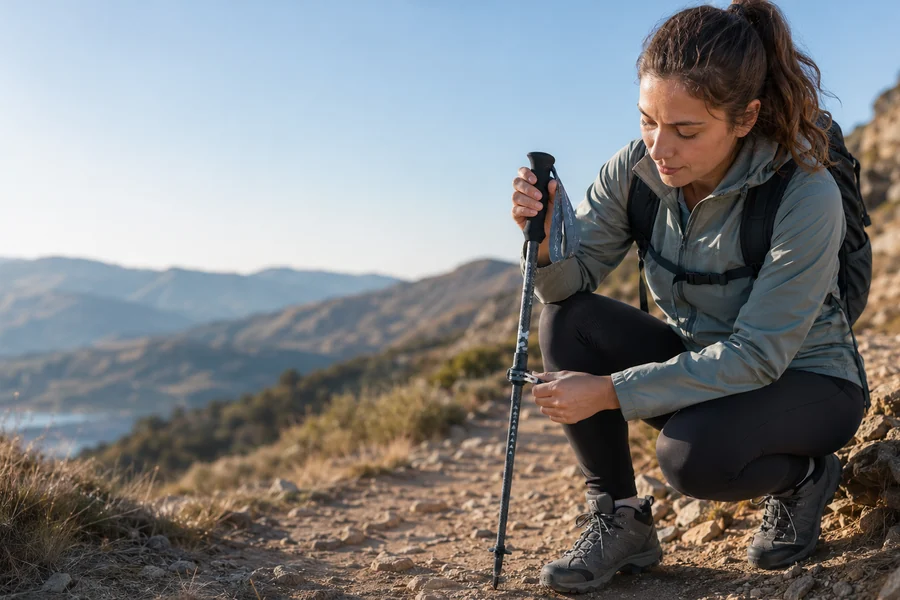
The Wrist Strap is more than a simple retention loop.
Bring your hand through the strap and then lower it onto the Grip. Adjust the strap so it feels secure without restricting movement.
A properly adjusted Wrist Strap helps maintain control and reduces the need to squeeze the Grip continuously.
Beginner Tip: Wrist Strap systems vary between products, so always use the strap according to the intended configuration of the specific pole.
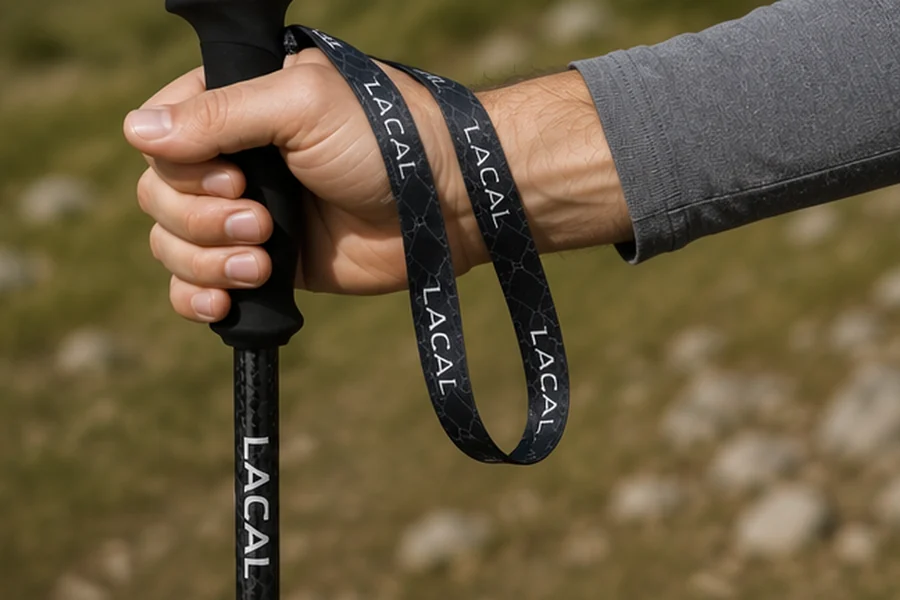
Beginners often hold trekking poles too tightly.
Instead, keep the Grip relaxed and allow the Wrist Strap to assist with control. Excessive squeezing can make the hands and forearms fatigue more quickly.
Whether the Grip uses EVA Foam, Natural Cork, TPE, or molded plastic, the basic principle is the same: hold it securely without unnecessary tension.
The easiest way to begin is to walk normally and let the poles follow your natural arm movement.
A common rhythm is:
This opposite-arm-and-leg pattern is similar to normal walking.
Do not exaggerate the movement or force the Pole Tip into the ground. Practice first on a flat path or easy trail until the rhythm feels automatic.
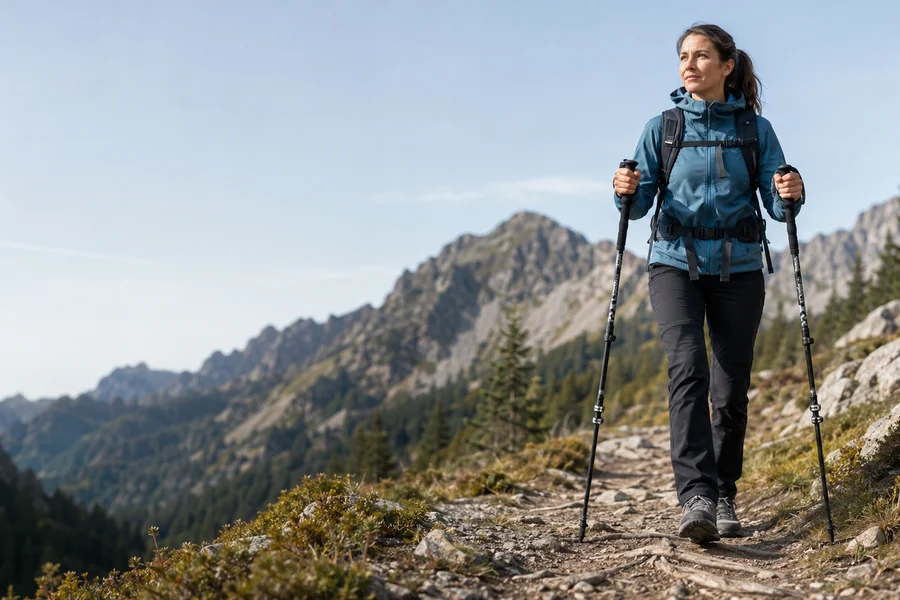
On normal terrain, the Pole Tip should land naturally near the body rather than far ahead.
Reaching too far forward can interrupt walking rhythm, while continuously dragging the Pole Tips behind you reduces control.
Aim for consistent, controlled placement. The exact position will naturally change with terrain, stride length, and walking speed.
Some users prefer a slightly shorter Working Length when climbing.
Keep the poles relatively close to the body and avoid reaching too far up the slope. Use them to support rhythm and balance rather than trying to pull the entire body uphill with the arms.
A slightly longer setting may feel more comfortable on some descents.
Place the poles ahead with control, but do not overreach. Trekking poles provide an additional contact point, but careful foot placement remains essential.
Pole placement becomes more important on technical ground.
Avoid inserting the Pole Tip deeply between rocks where it may become trapped.
Watch both the Pole Tip and Basket around roots and narrow gaps.
A suitable Basket can help reduce excessive sinking depending on terrain.
A larger Snow Basket may be more appropriate in deeper snow.
Beginners should focus on deliberate Pole Tip placement rather than planting the pole automatically with every step.
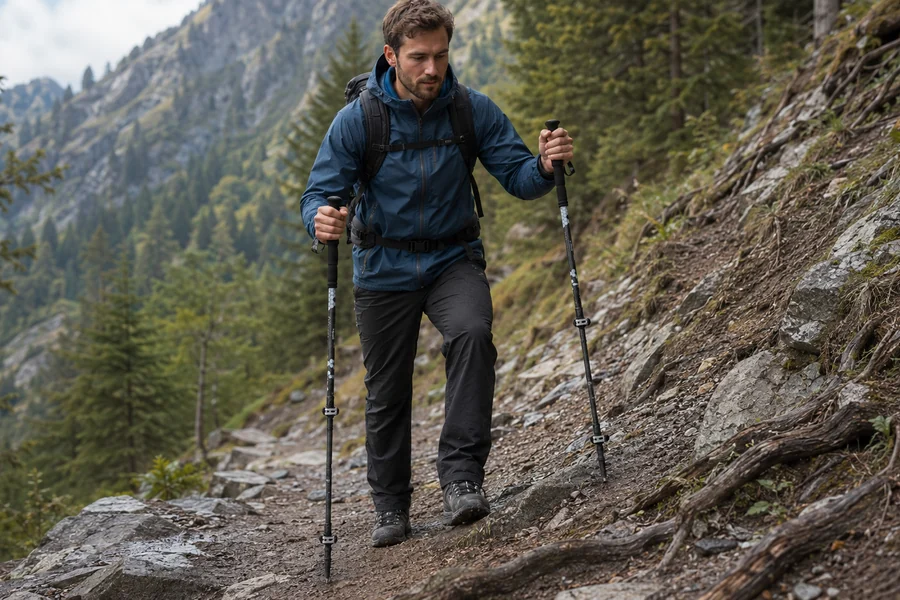
For normal hiking, beginners usually find it easier to learn with two Trekking Poles.
A pair supports a balanced walking rhythm and allows the arms to alternate naturally with the legs.
One pole can still be suitable for light walking or walking-stick style use, but the movement pattern is different.
Several mistakes are common when first learning to use trekking poles:
Most of these problems improve quickly with practice on easy terrain.
Always inspect the poles before use.
For Telescopic Trekking Poles, confirm that each Locking System is properly engaged and that the selected Working Length does not slip.
For Folding Trekking Poles, make sure all sections are fully assembled and the joints are properly seated.
Also inspect:
Important: a pole should not be used if the Locking System cannot reliably maintain its position or if structural damage is visible.
A short practice session is usually enough to understand the basics.
First 5 minutes: Adjust the pole length and Wrist Straps.
Next 5–10 minutes: Walk on flat ground and practice opposite-arm-and-leg rhythm.
Next: Focus on controlled Pole Tip placement.
Then: Try gentle uphill and downhill sections.
Complex terrain should come only after the basic rhythm feels natural.
There is no single best structure for every beginner.
They are easy to adjust and practical for general hiking, especially for users who are still learning their preferred Working Length.
They provide a compact Packed Length and are convenient for travel or backpack storage. Their assembly system is different, so users should understand how the folding sections and Locking System work before use.
Both Aluminum and Carbon Fiber shafts can be suitable for beginners.
For beginner use, simple adjustment, a reliable Locking System, comfortable Grip, appropriate Working Length, and intuitive operation are often more important than choosing the most advanced shaft material.
For brands, importers, distributors, and retailers developing beginner-oriented Trekking Poles, ease of use should be a major design priority.
Important factors include:
Beginner products should prioritize intuitive operation and reliable component design rather than unnecessary complexity.
XATP supports OEM and ODM Trekking Pole Development for Telescopic Trekking Poles, Folding Trekking Poles, and other walking-pole structures.
Development options include Aluminum and Carbon Fiber shafts, Grip and Wrist Strap customization, different Locking Systems, Basket configurations, Pole Tip and Tip Pad options, prototype development, packaging customization, and bulk production.
This allows structure, materials, components, ease of use, and market positioning to be developed together as one complete product system.
Beginners should focus on four fundamentals: correct pole length, proper Wrist Strap use, a relaxed Grip, and a natural opposite-arm-and-leg walking rhythm.
Practice these basics first on flat ground. Once they feel comfortable, trekking poles can gradually be introduced on uphill, downhill, and uneven terrain.
Good trekking-pole technique should feel natural rather than forced.
Manufacturing, R&D and production support for global trekking pole projects.


