


XATP 2025 Ultra Light Running Poles
October 19, 2025
 0574-65288269
 sales@ningbocomo.com


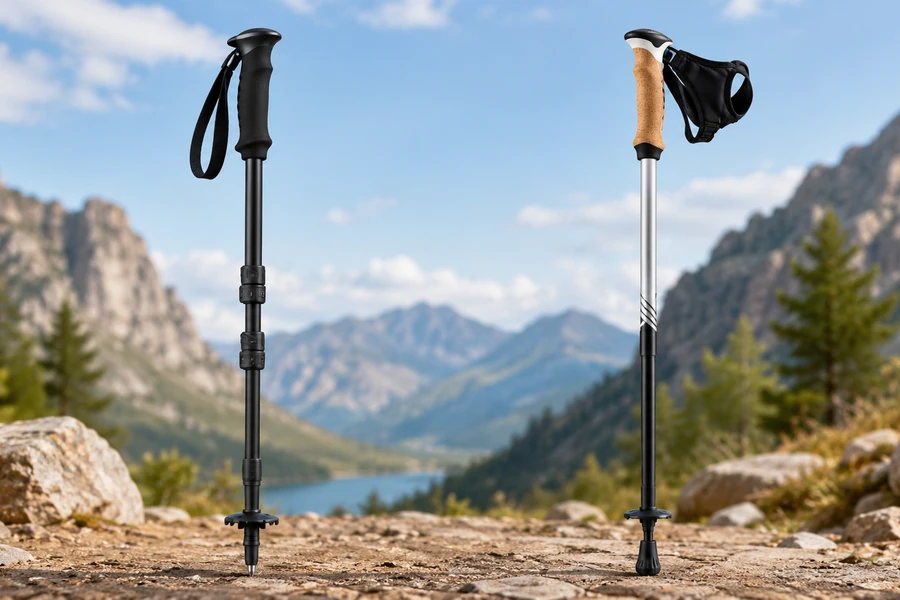
Yes, Trekking Poles can be used for Nordic Walking, especially for beginners, casual fitness walking, or occasional use. However, dedicated Nordic Walking Poles are generally better suited to proper Nordic Walking technique.
The key difference is not simply pole length. Nordic Walking relies on a coordinated system of Grip, Wrist Strap, shaft, Pole Tip, and Tip Pad to support repeated backward propulsion and forward recovery. Trekking Poles, by contrast, are primarily designed for stability and support on hiking trails.
Although the two products can look similar, their design priorities are different. Dedicated Nordic Walking Poles are developed around fitness walking, rhythmic pole movement, and forward propulsion.
| Feature | Trekking Poles | Nordic Walking Poles |
|---|---|---|
| Primary Use | Hiking and trekking | Fitness walking and propulsion |
| Length | Commonly adjustable | Fixed-Length or adjustable |
| Grip | Hiking-oriented | Designed for repeated release and recovery |
| Wrist Strap | Standard adjustable strap | Specialized or glove-style strap common |
| Pole Tip | Trail-oriented | Walking-surface oriented |
| Tip Pad | Optional | Common for hard surfaces |
| Basket | Trail and snow options | Usually smaller |
| Main Function | Support and stability | Propulsion and walking rhythm |
These are general differences rather than absolute rules. A suitable Trekking Pole can still work reasonably well for casual Nordic Walking.
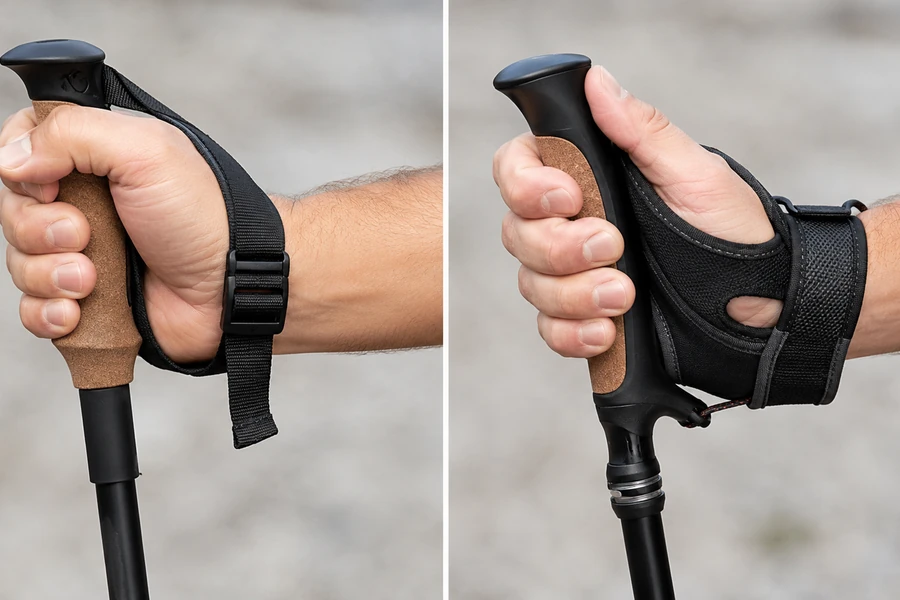
The Wrist Strap is one of the most important differences between Trekking Poles and Nordic Walking Poles.
Nordic Walking technique typically involves pushing the pole backward and allowing the hand to open or partially release the Grip before recovering the pole forward. A specialized Wrist Strap helps maintain control throughout this movement.
A conventional Trekking Pole strap can work for casual walking, but it may not support the same release-and-recovery motion as effectively.
Key Point: for Nordic Walking, the Grip and Wrist Strap should be considered as one system rather than as separate components.
Trekking Pole Grips are generally designed for prolonged hand contact and support. Common materials include EVA Foam, Natural Cork, TPE, and molded plastics.
Some Trekking Poles also feature an extended Grip, allowing users to change hand position on varied terrain without changing the shaft length.
Nordic Walking Grips are more closely designed around continuous swinging, backward propulsion, and repeated hand release. A Trekking Pole Grip may therefore be comfortable for walking without necessarily being ideal for proper Nordic Walking technique.
Yes. Telescopic Trekking Poles can be a practical option for beginners because their Working Length is easy to adjust.
They can work well for:
However, length adjustment alone does not make a Trekking Pole equivalent to a dedicated Nordic Walking Pole. Wrist Strap design, Grip shape, finished weight, Tip Pad compatibility, and swing balance also matter.
Folding Trekking Poles can also be used, especially when compact Packed Length and travel convenience are important.
However, folding joints, Internal Cord systems, adjustable sections, and Locking Systems all contribute to the finished weight and balance of the pole.
For occasional walking, a lightweight Folding Trekking Pole may be practical. For regular Nordic Walking, a simpler and well-balanced pole may feel more natural during continuous rhythmic movement.
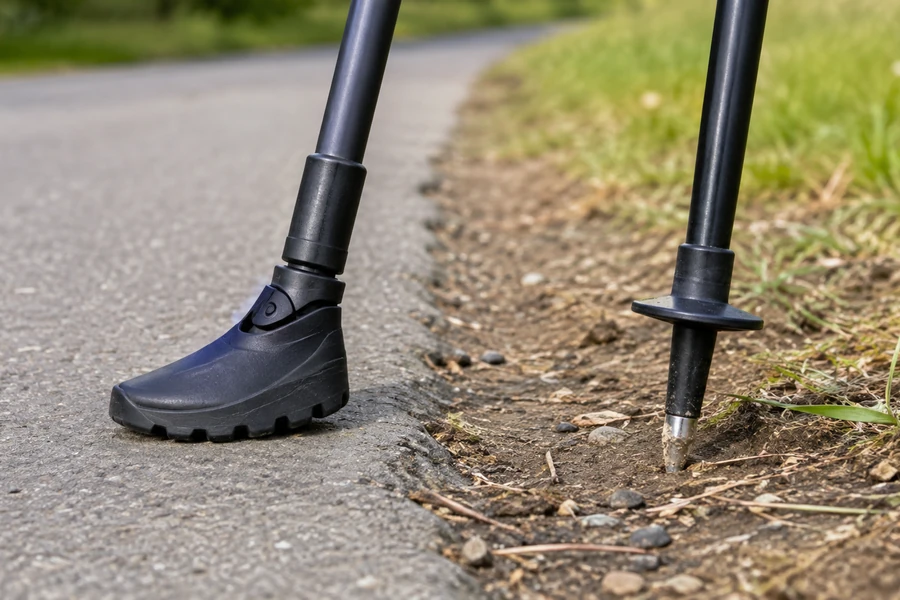
Nordic Walking often takes place on pavement, park paths, hard-packed surfaces, and mixed urban or recreational routes.
For these surfaces, the Tip Pad is particularly important.
Trekking Poles normally use Pole Tips intended for soil, rock, and trail surfaces. If a compatible Tip Pad can be installed, the same pole may become much more practical for Nordic Walking on hard ground.
Large Snow Baskets are generally unnecessary for normal Nordic Walking. A small Basket may still be useful on mixed surfaces.
Not always.
Even when the pole length is correct, proper Nordic Walking technique may be more difficult if:
This is why dedicated Nordic Walking Poles are usually developed as a complete Grip–Strap–Shaft–Tip system rather than simply as Trekking Poles with different accessories.
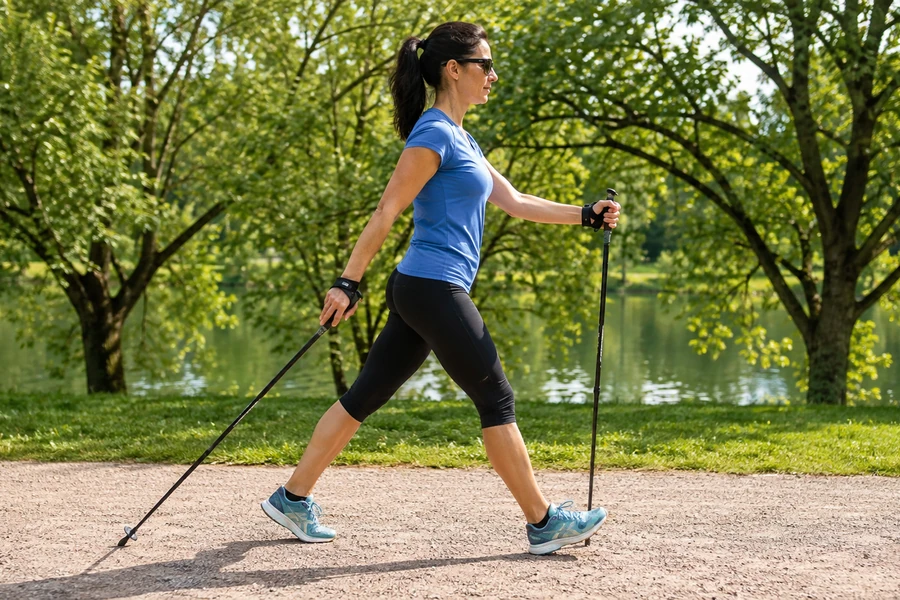
Trekking Poles can be a practical option when Nordic Walking is occasional, the user is still learning, or the same poles are also used for hiking.
If the poles have a suitable length, comfortable Wrist Straps, manageable weight, and compatible Tip Pads, there may be no immediate need to purchase a separate pair.
Dedicated Nordic Walking Poles are generally more appropriate for:
For these applications, differences in Grip, Wrist Strap, Tip Pad, weight, and swing balance become more important.
For brands, importers, distributors, and retailers, a Nordic Walking Pole should not simply be treated as a Trekking Pole with different accessories.
Important development factors include:
The product should be developed around the complete walking movement rather than shaft material or pole length alone.
XATP supports OEM and ODM Nordic Walking and Trekking Pole Development for different markets, users, and product positioning requirements.
Development options include Telescopic and Fixed-Length structures, Aluminum and Carbon Fiber shafts, customized Grips and Wrist Straps, quick-release strap systems, Pole Tip and Tip Pad options, Basket configurations, prototype development, packaging customization, and bulk production.
This allows the Grip, Wrist Strap, shaft, lower pole components, and overall product positioning to be developed around the intended walking activity.
Trekking Poles can be used for casual Nordic Walking, particularly for beginners or occasional users who already own suitable poles.
For regular or technique-focused Nordic Walking, dedicated Nordic Walking Poles are generally the better choice because their Grip, Wrist Strap, Pole Tip, Tip Pad, weight, and swing characteristics are designed specifically for repeated propulsion and recovery.
For occasional walking, Trekking Poles may be sufficient. For regular Nordic Walking training, purpose-built Nordic Walking Poles are generally more appropriate.
Manufacturing, R&D and production support for global trekking pole projects.


