


XATP 2025 Ultra Light Running Poles
October 19, 2025
 0574-65288269
 sales@ningbocomo.com


A collapsible Trekking Pole can fail in several ways. It may stop locking, keep sliding shorter under load, refuse to extend, fail to stay assembled, or develop damage around the shaft, folding joints, Pole Tip, Grip, or Wrist Strap.
The correct repair starts with identifying the pole structure and the component that has actually failed.
Some problems can be solved by cleaning, adjustment, or replacing a small part. Structural damage usually requires component replacement rather than a temporary repair.
“Collapsible trekking pole” is a broad term rather than one specific structure. It usually refers to either a Telescopic Trekking Pole or a Folding Trekking Pole.
A Telescopic Trekking Pole uses shaft sections that slide inside one another. Common systems include External Lock and Internal Lock structures. The pole becomes shorter by retracting one section into another.
A Folding Trekking Pole uses several shorter shaft sections connected by an Internal Cord or similar tensioning structure. Common features include multiple folding sections, folding joints, Internal Cord, a tensioning mechanism, and sometimes an adjustable upper section.
Because the two structures work differently, their repair procedures are also different.
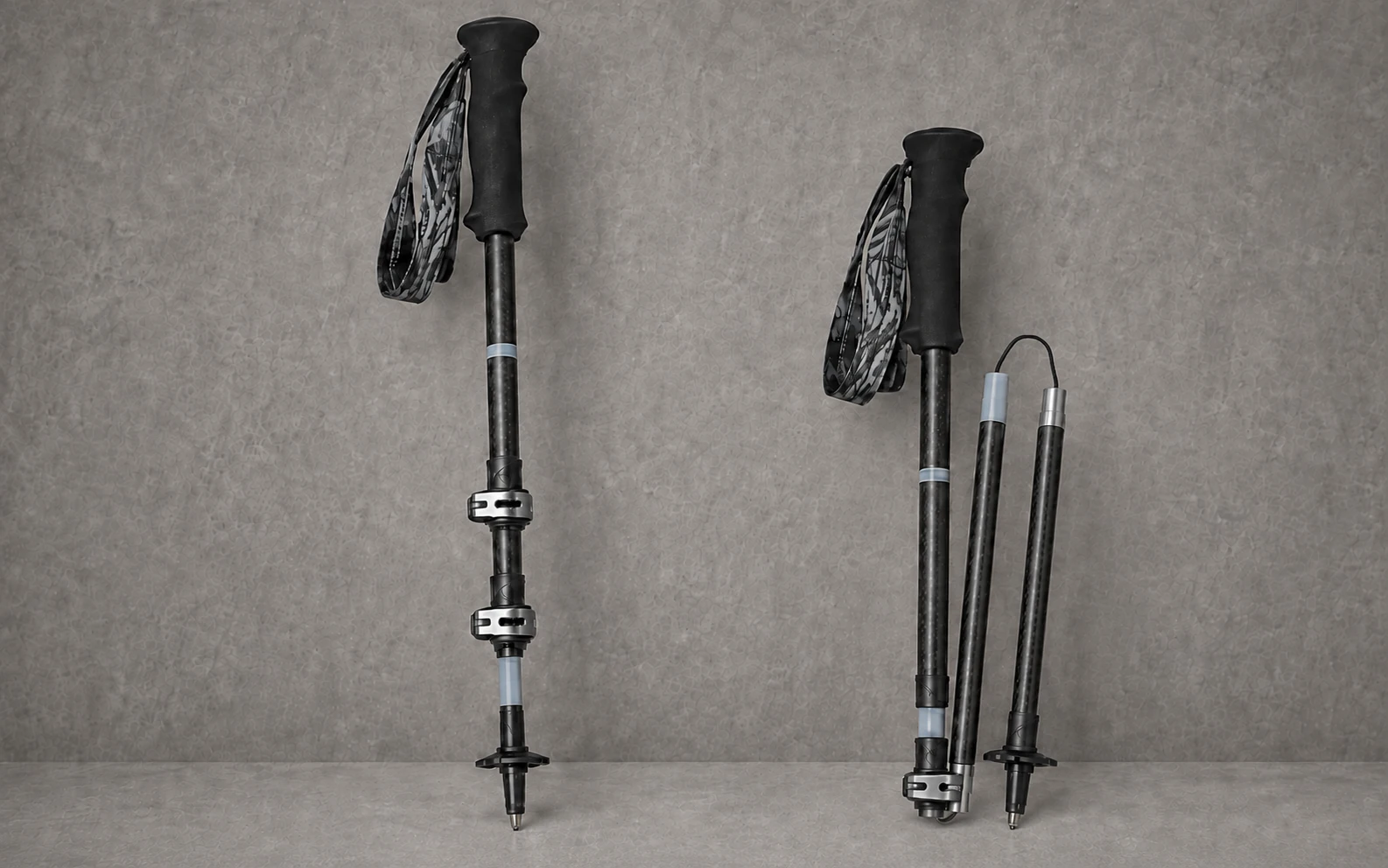
Before disassembling anything, determine where the problem is occurring.
| Problem | Likely Area |
|---|---|
| Pole will not lock | Locking System |
| Shaft keeps slipping | Lock tension or shaft surface |
| Sections will not extend | Dirt, moisture, deformation, or internal mechanism |
| Folding sections will not stay connected | Internal Cord or folding joint |
| Pole will not fold | Cord tension or joint obstruction |
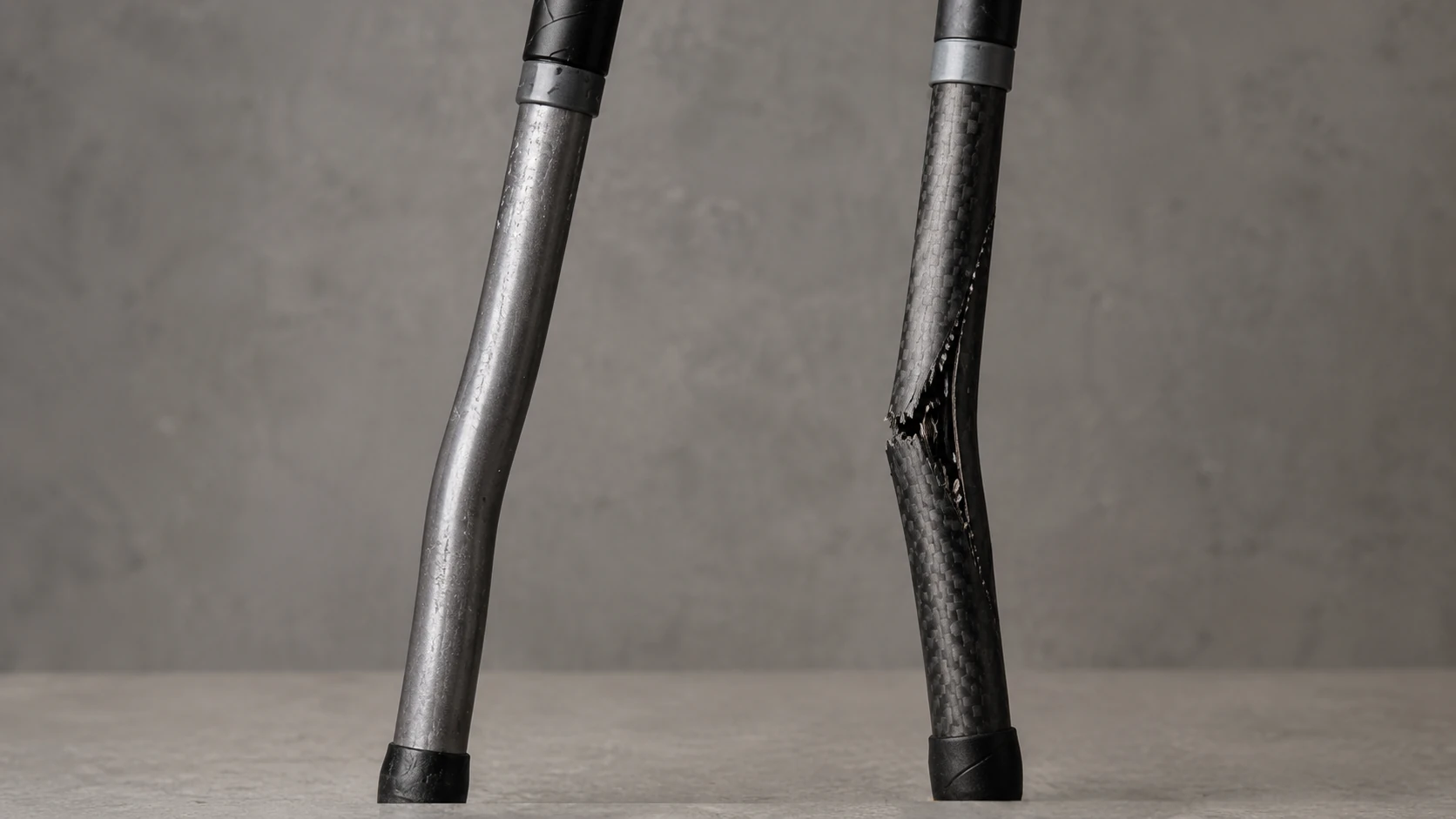
| Shaft is bent | Aluminum shaft |
| Shaft is cracked | Carbon Fiber shaft |
| Pole Tip is loose | Pole Tip assembly |
| Grip or Wrist Strap is damaged | Handle assembly |
Do not continue loading the pole until the cause is understood.
This problem is most common on Telescopic Trekking Poles.
For an External Lock system:
Important: Do not tighten the adjustment screw as far as possible. Excessive tightening can make the lock difficult to operate and may place unnecessary stress on the lock housing or shaft.
If the pole still slips after correct cleaning and adjustment, the lock component may be worn or damaged.
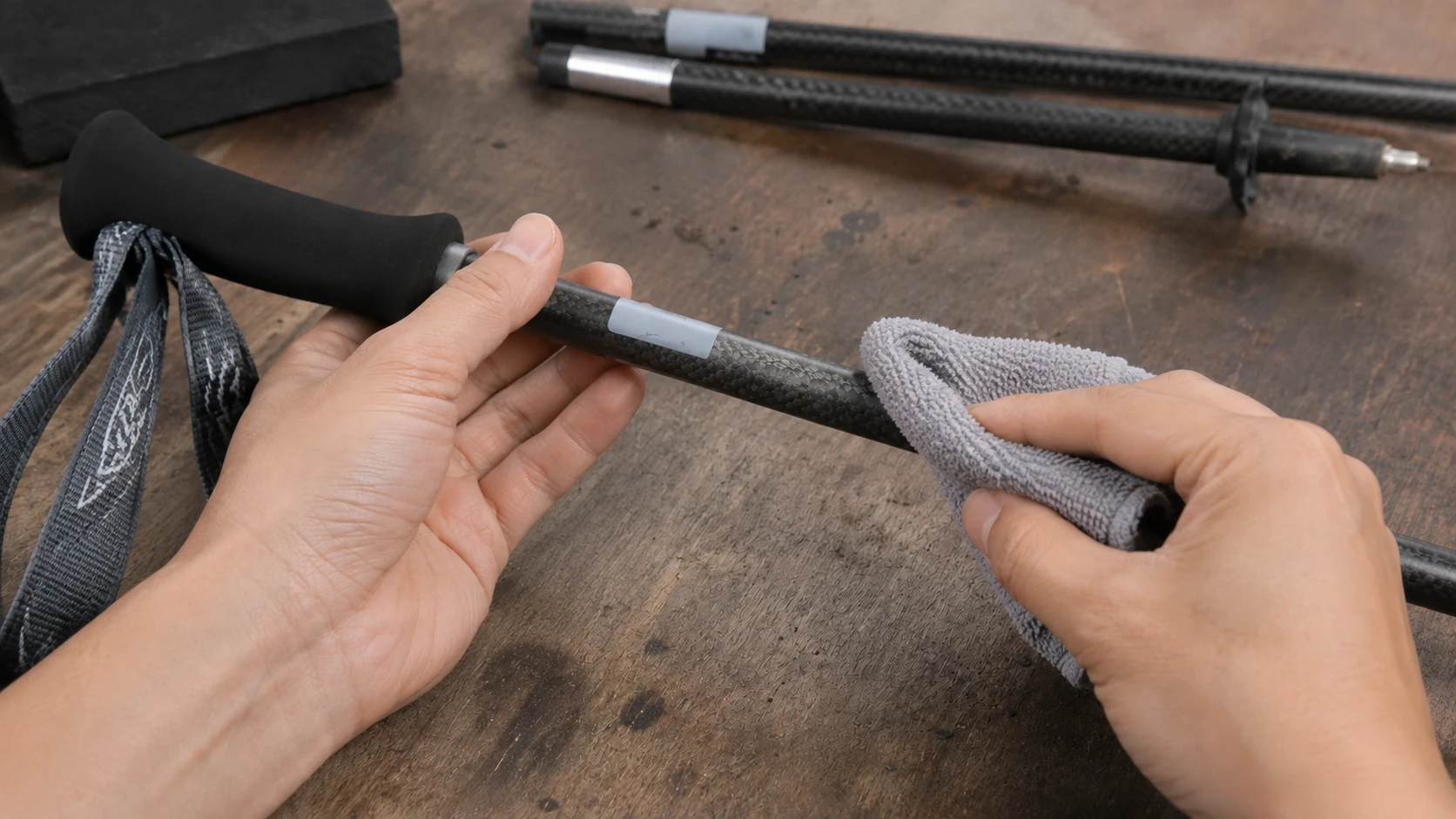
Internal Lock systems usually rely on an expansion mechanism inside the shaft.
If the pole rotates but does not lock:
Do not force a jammed internal mechanism. If an internal component is cracked, stripped, or no longer expands correctly, replacement is generally more reliable than repeated adjustment.
A Folding Trekking Pole must be fully tensioned and every joint must be properly seated.
If the pole will not remain assembled:
A partially seated folding joint can make the pole appear assembled even though the connection is not secure.
Folding poles use different internal tensioning systems.
Depending on the design, the connection may use:
Some models allow user adjustment of cord tension. If the product includes an accessible tensioning mechanism, adjust only within the intended range.
If the cord is:
Replacement is usually more appropriate than an improvised repair. The Internal Cord is part of the folding structure, so incorrect tension can prevent the shaft sections from seating properly.
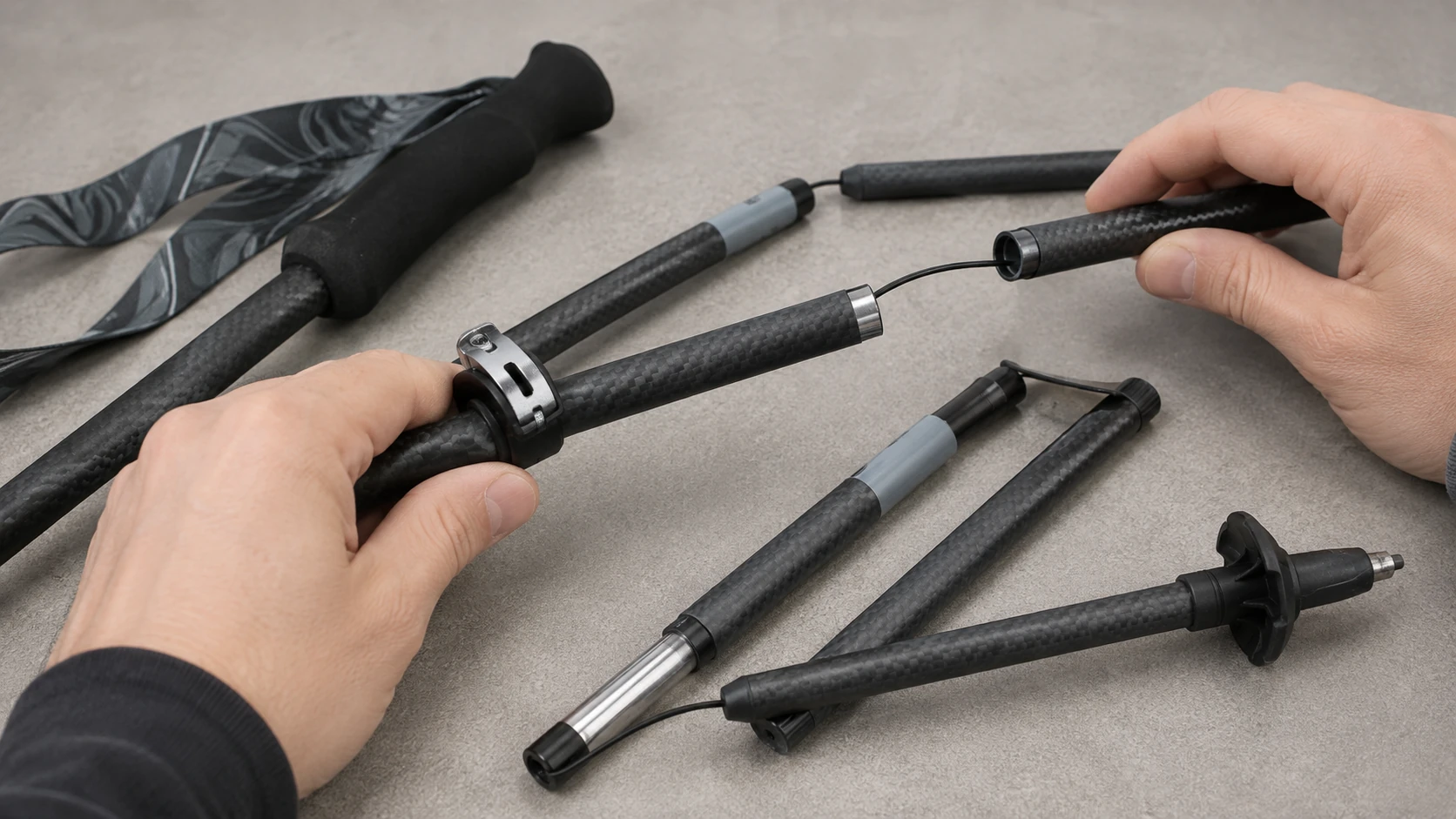
Folding joints can become difficult to separate because of mud, sand, fine dust, ice, salt, corrosion, or shaft deformation.
Instead of aggressively twisting or pulling the sections with tools:
Excessive force can damage the shaft surface or folding joint.
If a Telescopic Trekking Pole becomes shorter while walking, check the following in order:
Important: A common mistake is adding lubricant to a shaft that depends on friction for locking. Unless the product instructions specifically require lubrication, keep friction-based locking surfaces clean and dry.
A visibly bent aluminum shaft should be treated as structural damage.
Trying to bend it back may improve appearance, but the material may already have been weakened.
A bent shaft can also affect:
For a clearly bent load-bearing section, replacing the damaged shaft section is generally the better solution.
A cracked Carbon Fiber shaft should normally be replaced.
Damage can extend beyond the visible crack, and remaining structural strength cannot be confirmed by visual inspection alone.
Wrapping the damaged area with tape, adhesive, or another material may hold the surface together, but it does not restore the original shaft performance.
Stop using the damaged section if you see:
Replacement is the more appropriate solution.
Pole Tips wear over time, especially on hard or rocky terrain.
Depending on the product, the tip assembly may be:
Use a compatible replacement part rather than forcing a different Pole Tip onto the shaft.
After replacement, confirm that:
Wrist Straps are often easier to replace than repair.
Replace the Wrist Strap if there is damage to:
Grip repair depends on the construction. A loose Grip may sometimes be reattached depending on the original assembly method, but a cracked or structurally damaged molded Grip is usually better replaced.
Do not assume that the same adhesive is suitable for EVA Foam, cork, TPE, plastic, or other Grip materials.
Many apparent mechanical problems are caused by contamination rather than component failure.
Before replacing parts:
Keep friction-based locking surfaces free from oil unless the product instructions specifically state otherwise. A clean mechanism is easier to inspect and diagnose.
Some failures should not be treated as temporary field repairs.
Stop using the pole if you find:
A trekking pole should not return to normal use until all load-bearing sections are secure.
Some components are easier to service than others.
| Component | Usually Serviceable? |
|---|---|
| Basket | Often replaceable |
| Pole Tip | Often replaceable |
| Wrist Strap | Often replaceable |
| External Lock | Model-dependent |
| Internal Lock parts | Model-dependent |
| Internal Cord | Model-dependent |
| Shaft Section | Often better replaced |
| Cracked Carbon Fiber shaft | Replace |
| Severely bent aluminum shaft | Replace |
Spare-part availability depends on the original product design.
For brands, importers, distributors, and retailers, repairability should be considered during product development rather than only after a failure occurs.
Important factors include:
Key Point: A trekking pole should not be evaluated only by weight, Working Length, and Packed Length. Serviceability and replaceable components also affect long-term product value.
XATP supports OEM and ODM Trekking Pole Development with serviceability considered during structural development.
Available development options include:
These options allow trekking pole projects to consider not only initial product performance, but also maintenance, spare parts, and after-sales requirements.
Repairing a collapsible trekking pole starts with identifying the pole structure and the failed component.
Loose Locking Systems, dirty joints, worn Baskets, Pole Tips, and Wrist Straps may often be cleaned, adjusted, or replaced.
Structural damage requires a different approach. A cracked Carbon Fiber shaft, severely bent aluminum shaft, broken folding joint, or Locking System that cannot reliably hold load should normally be replaced rather than temporarily repaired.
Before returning any repaired trekking pole to use, make sure every shaft section, folding joint, and Locking System is fully secured and able to hold load consistently.
Manufacturing, R&D and production support for global trekking pole projects.


