


XATP 2025 Ultra Light Running Poles
October 19, 2025
 0574-65288269
 sales@ningbocomo.com


Trekking Poles can be useful for snow hiking and general winter travel, but they are not usually a direct substitute for dedicated ski poles.
Whether a trekking pole is suitable depends on the activity, pole length, Basket size, shaft structure, Grip, Wrist Strap, and snow conditions.
The key distinction is simple: snow hiking, alpine skiing, and cross-country skiing use poles in different ways. A pole that works well on a snowy hiking trail may not be appropriate for skiing.
Trekking Poles, Alpine Ski Poles, and Cross-Country Ski Poles are designed around different movement patterns and structural requirements.
| Feature | Trekking Poles | Alpine Ski Poles | Cross-Country Ski Poles |
|---|---|---|---|
| Main Use | Hiking and trekking | Downhill skiing | Nordic / cross-country skiing |
| Length | Often adjustable | Usually Fixed-Length | Usually longer |
| Basket | Small or interchangeable | Snow-oriented Basket | XC-specific Basket |
| Grip | Hiking-oriented | Ski-specific | Nordic-specific |
| Wrist Strap | Standard Wrist Strap | Ski-oriented strap | Performance-oriented strap |
| Shaft Structure | Telescopic, Folding, or Fixed-Length | Usually Fixed-Length | Usually Fixed-Length |
The difference is not only appearance. Pole balance, shaft structure, Basket design, Grip, and intended movement all affect how the pole performs.
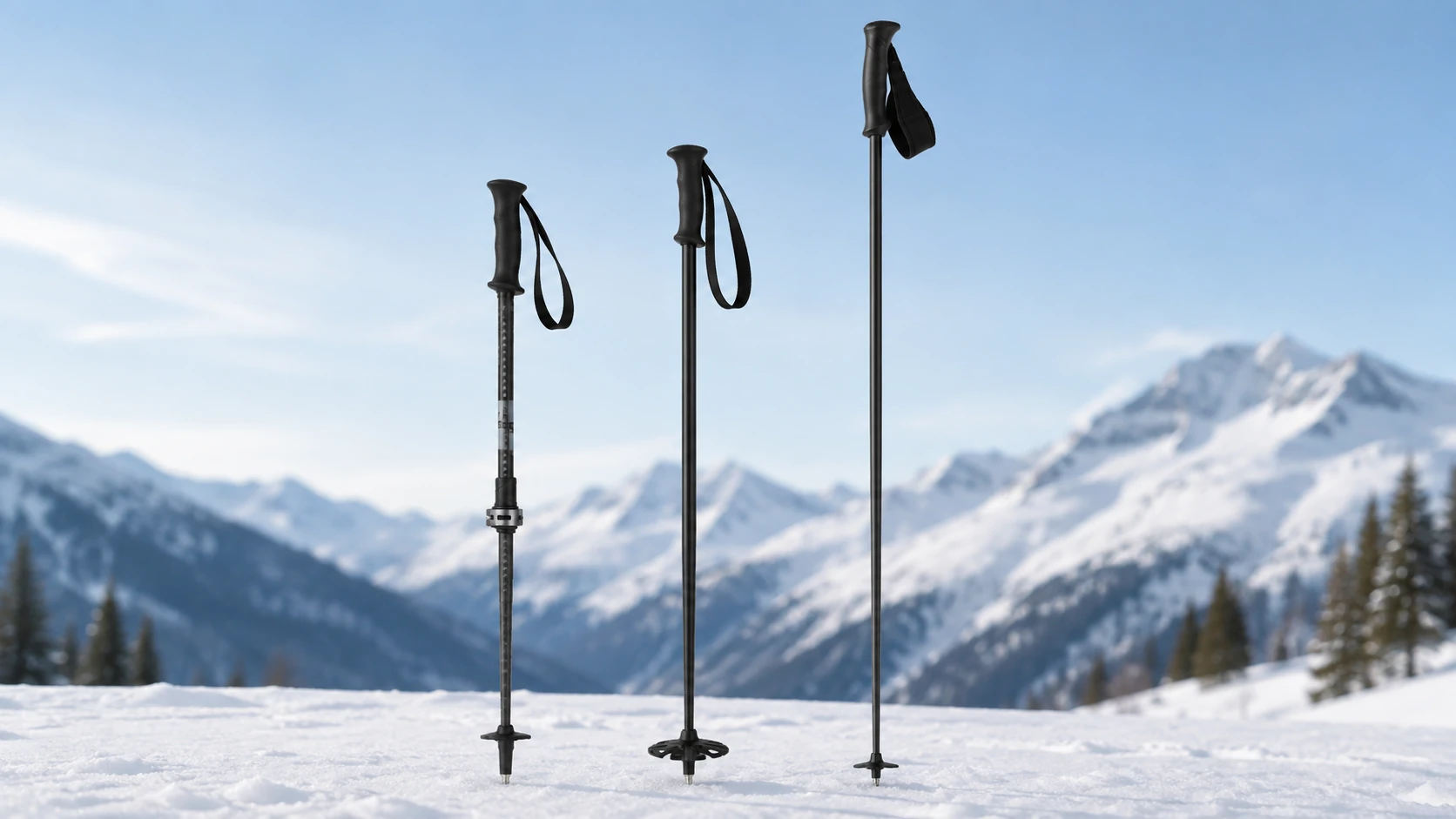
Trekking poles are generally not recommended as direct replacements for Alpine Ski Poles.
Some adjustable Trekking Poles may reach a similar Working Length, but similar length does not mean the products are designed for the same activity.
Important differences can include:
Many Trekking Poles use Telescopic or Folding structures, while Alpine Ski Poles are commonly designed as simpler Fixed-Length poles.
A small Trekking Basket may also sink more deeply into soft snow than a Basket designed for skiing.
For walking around a ski area or moving over snow before skiing, a Trekking Pole may still be practical. For downhill skiing itself, a dedicated Alpine Ski Pole is the more appropriate choice.
Trekking poles are generally even less suitable as substitutes for Cross-Country Ski Poles.
Cross-Country Ski Poles are designed around a movement pattern in which the poles contribute directly to propulsion.
Typical differences include:
Even if a Trekking Pole can extend to a similar length, it does not automatically provide the same handling or efficiency as a Cross-Country Ski Pole.
For regular cross-country skiing, poles designed specifically for that discipline are preferable.
Yes. Snow hiking is one of the situations where Trekking Poles can be very practical.
They are commonly suitable for:
In many cases, the same Trekking Pole can continue to be used with a more suitable Basket configuration.
For deeper snow, a larger Snow Basket can help reduce excessive sinking.
The Working Length and Basket should still match the terrain and snow conditions.
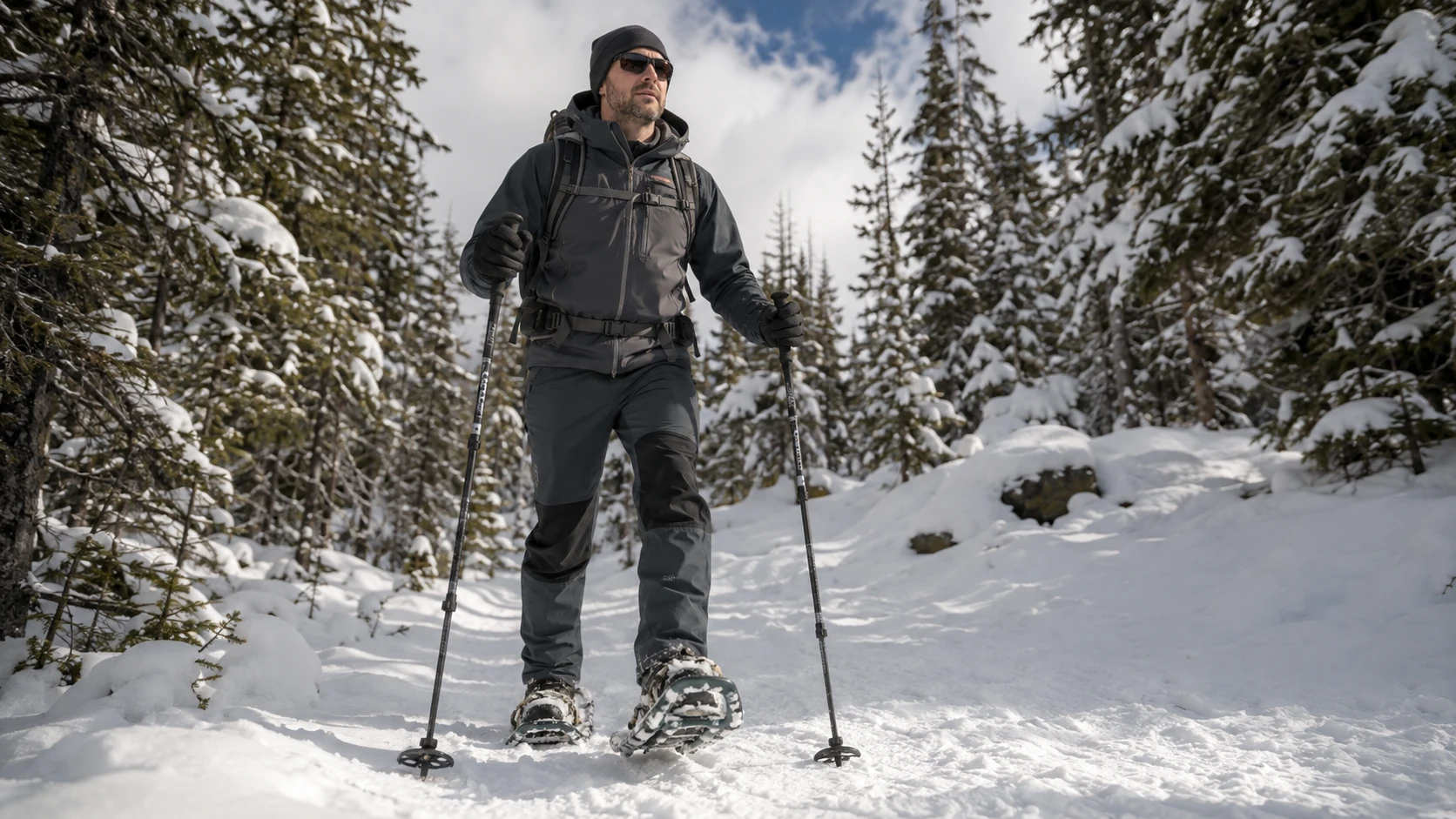
Basket design becomes more important when poles are used in snow.
A small standard Trekking Basket is mainly designed for normal trail conditions.
In softer or deeper snow, a larger Basket provides more surface area and can help reduce how deeply the pole sinks.
Common configurations include:
Key Point: A larger Basket alone does not convert a Trekking Pole into a Ski Pole because the rest of the product structure remains different.
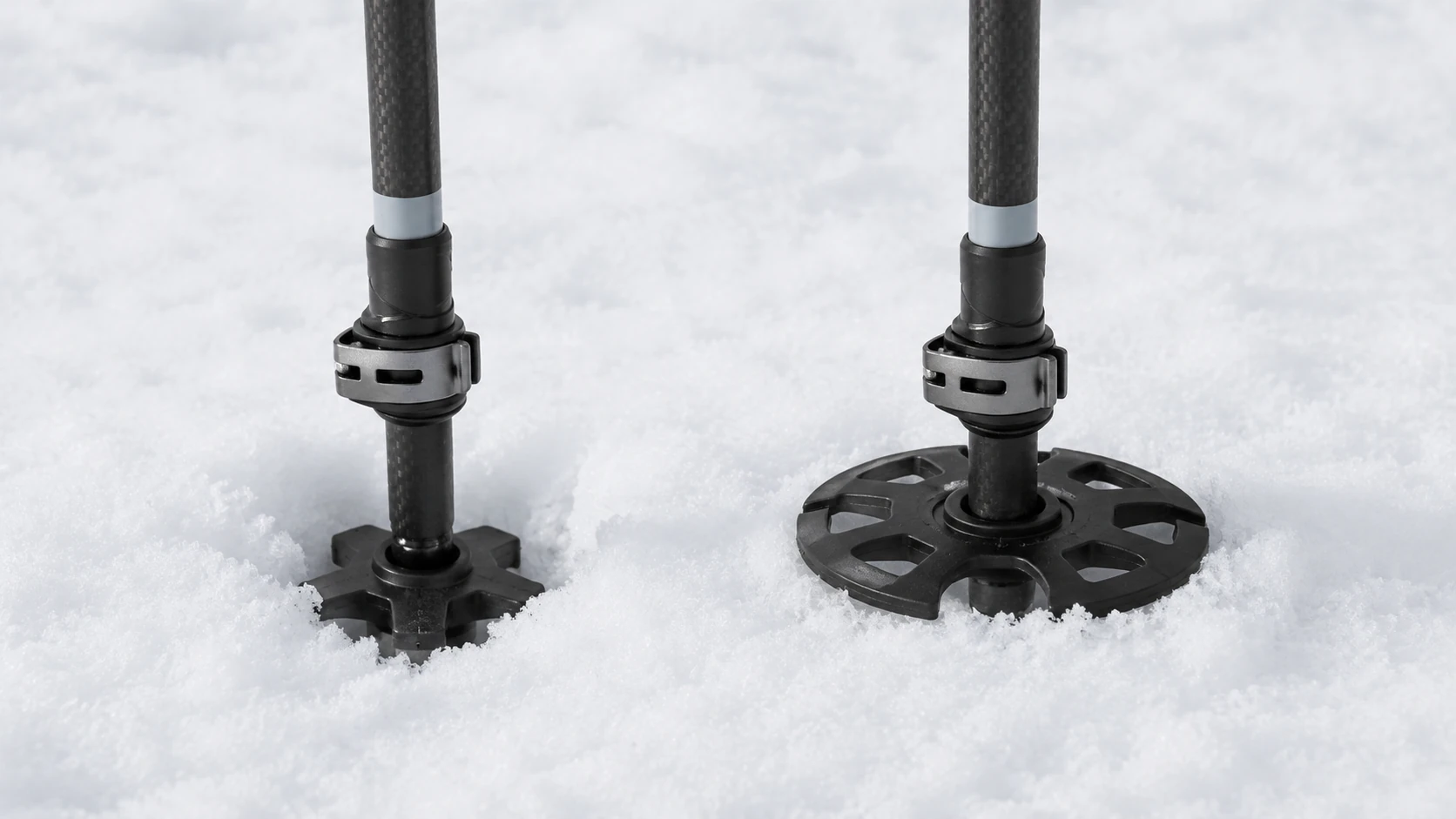
Yes, but length should always be considered together with the activity.
Trekking Poles mainly support walking balance, rhythm, and stability.
Alpine Ski Poles are used for balance, timing, and pole planting during downhill skiing.
Cross-Country Ski Poles contribute more directly to propulsion and therefore use different length and movement requirements.
This is why a Trekking Pole should not be selected for skiing simply because its maximum length appears suitable.
Telescopic Trekking Poles can be useful for winter hiking because they offer:
However, their structure includes Locking Systems that are not normally present in standard Fixed-Length Ski Poles.
External Lock and Internal Lock systems are primarily designed around trekking requirements.
For snow hiking and snowshoeing, adjustability can be useful. For dedicated skiing, the structure and movement requirements are different.
Folding Trekking Poles are designed primarily around compact storage and hiking portability.
Their structure may include:
These features are useful for hiking and transportation, but they do not make the product equivalent to an Alpine Ski Pole or Cross-Country Ski Pole.
The two product categories are designed around different priorities.
Trekking Poles can still be useful in winter environments when skiing itself is not the main activity.
Examples include:
In these situations, a Trekking Pole with an appropriate Snow Basket may be practical.
Key Point: The important distinction is between using poles in snow and using poles for skiing technique.
Dedicated Ski Poles are the better choice when skiing is the primary activity.
This includes:
A pole designed specifically for the activity can better match the required Working Length, Grip, Wrist Strap, Basket, shaft structure, and movement pattern.
If skiing is the main activity, use a pole designed for that skiing discipline.
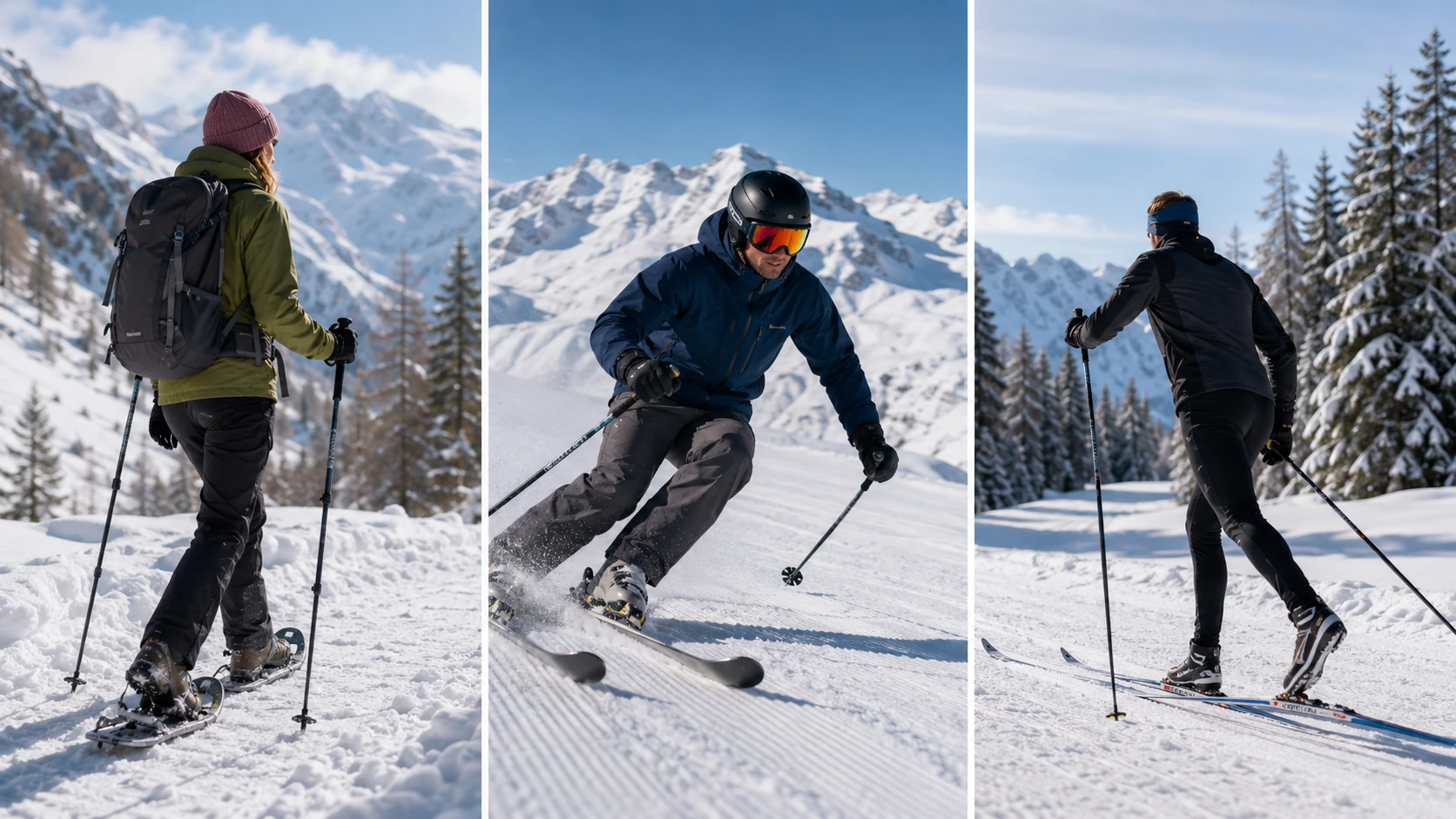
The intended activity should come before individual product specifications.
For brands, importers, distributors, and retailers, winter poles should not be treated as one single product category.
The first consideration should be the intended activity:
Important product factors include:
Key Point: A pole designed for snow hiking may require a very different structure from one intended for downhill skiing or cross-country skiing.
XATP supports OEM and ODM development for different trekking and winter pole categories.
Available development options include:
Brands, importers, distributors, and retailers can review XATP’s Custom Trekking and Ski Pole OEM and ODM Services for additional project information.
Trekking poles can be useful for snow hiking, snowshoeing, and general winter travel, but they are not a direct replacement for dedicated Ski Poles.
Alpine skiing and cross-country skiing use different pole lengths, structures, Baskets, Grips, Wrist Straps, and movement patterns.
A Trekking Pole may perform well in snow without being suitable for skiing itself.
When skiing is the primary activity, choose a pole designed specifically for that skiing discipline.
Manufacturing, R&D and production support for global trekking pole projects.


