


XATP 2025 Ultra Light Running Poles
October 19, 2025
 0574-65288269
 sales@ningbocomo.com


Trekking poles should be collapsed or folded before being attached to a backpack. A secure setup keeps the poles close to the pack, prevents excessive movement, and reduces the risk of the Pole Tips catching on branches or hitting the user’s legs.
Most hiking backpacks use side pockets, compression straps, bottom loops, or front elastic cords. Whichever method is used, the poles should normally be secured at two points.
Before attaching trekking poles to a backpack:
Wet or muddy trekking poles should be cleaned before being placed inside the backpack.
This is the most common attachment method for Telescopic Trekking Poles.
When carrying two poles, secure them together so they do not swing separately.
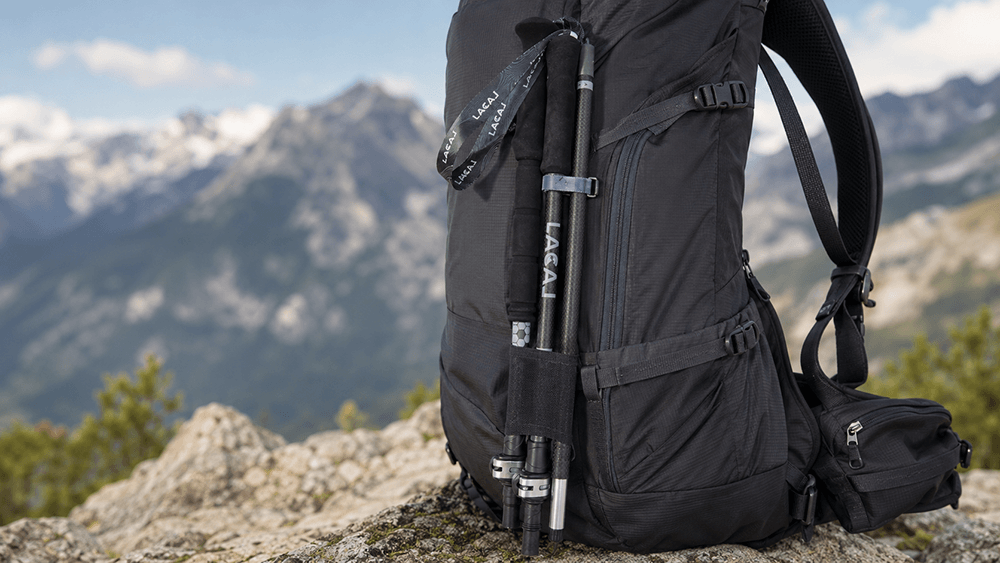
Some hiking backpacks include a lower loop designed for trekking poles.
Insert the Pole Tips into the loop, position the shafts vertically, and secure the upper sections with an elastic cord or strap. Both attachment points should be tight enough to prevent bouncing.
Check the lower loop carefully. If it is too loose, the Pole Tips may slip out while walking.
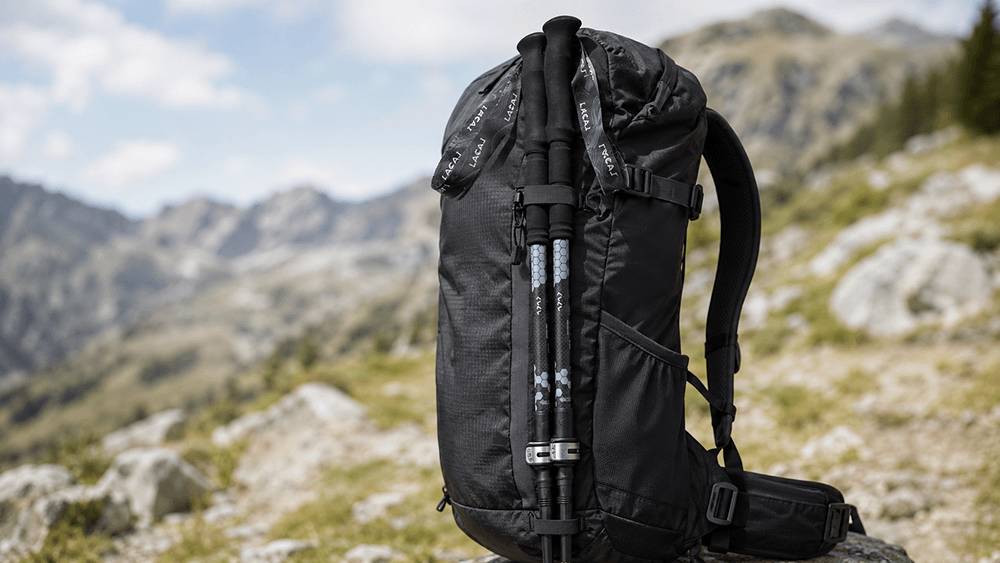
A front elastic cord is suitable for compact Folding Trekking Poles.
Fold the poles completely, place them flat against the backpack, and tighten the cord around several shaft sections. For rough trails, use an additional strap to prevent movement.
This method provides quick access but is less suitable for long Telescopic Trekking Poles.
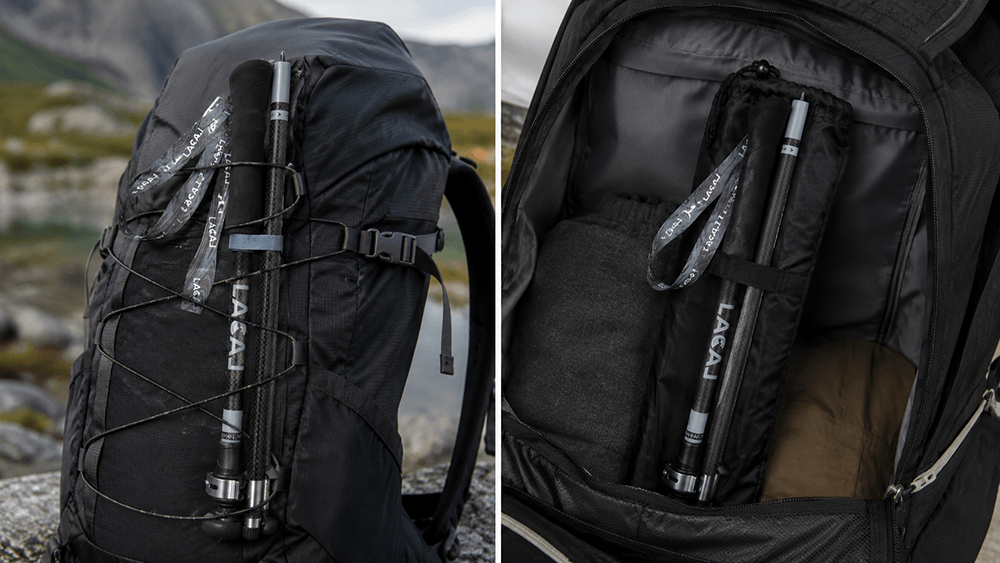
Compact Folding Trekking Poles can also be stored inside the backpack.
Internal storage reduces the risk of snagging but makes the poles slower to access.
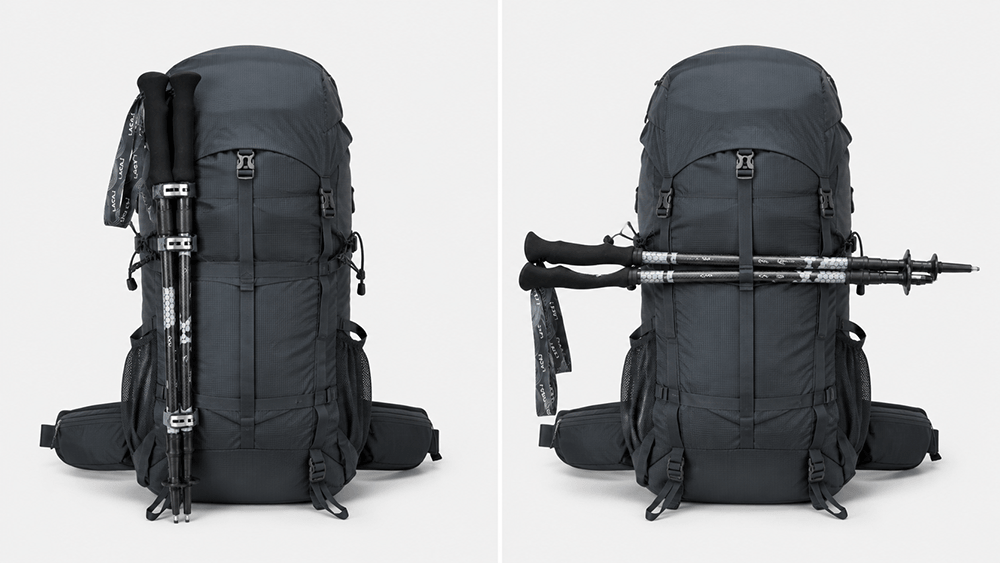
For most external attachment methods, the Pole Tips should face downward.
This allows the lower sections to fit into a side pocket or bottom loop while keeping the shafts close to the backpack. The tips should not extend far below the pack or touch the user’s legs.
When the Pole Tips face upward, Tip Pads should be installed and the poles should remain away from the user’s head and shoulders.
| Attachment Method | Best For | Main Advantage | Main Check |
|---|---|---|---|
| Side pocket and compression strap | Telescopic poles | Stable and simple | Secure upper and lower sections |
| Bottom loop and upper strap | Hiking backpacks | Uses dedicated attachment points | Check the lower loop |
| Front elastic cord | Folding poles | Quick access | Prevent bouncing |
| Inside the backpack | Compact, clean poles | Reduces snagging | Protect the Pole Tips |
Avoid attaching trekking poles at only one point. A single loose strap may allow them to swing while walking.
After securing the poles, shake the backpack gently and walk several steps. Confirm that the poles remain close to the pack and do not touch the user’s legs.
After removing the poles from the backpack, correct adjustment and walking technique are explained in this guide on how to walk with trekking poles.
Telescopic Trekking Poles usually have a longer Packed Length and are best carried in a side pocket with compression straps.
Fixed-Length Folding Trekking Poles form a compact bundle and can be attached with elastic cords or stored inside the backpack.
Adjustable-Length Folding Trekking Poles should first be shortened at the adjustable upper section and then folded.
For outdoor brands and retailers, backpack compatibility can affect the practical value of a trekking pole.
Clear instructions can help users collapse, fold, attach, and transport the poles correctly.
XATP provides OEM and ODM support for outdoor brands, importers, distributors, retailers, and private-label buyers.
Support includes material selection, structure planning, Packed Length development, sample production, aluminum tube processing, carbon fiber production, injection molding, printing, assembly, quality inspection, accessories, Storage Bags, and packaging. Buyers can review XATP’s custom trekking pole OEM and ODM services for additional project information.
The simplest method is to place the lower ends of the trekking poles in a side pocket and secure the upper shafts with a compression strap.
Compact Folding Trekking Poles can also be attached with elastic cords or stored inside the backpack. In every case, the poles should be secured at two points, kept close to the pack, and checked before walking.
Manufacturing, R&D and production support for global trekking pole projects.


