


XATP 2025 Ultra Light Running Poles
October 19, 2025
 0574-65288269
 sales@ningbocomo.com


Adjusting Trekking Poles correctly is not only about setting the desired length. Each shaft section must remain within its safe adjustment range, and every Locking System should be fully secured before use.
The adjustment method depends on the pole structure. External Lock, Internal Lock, and Adjustable Folding Trekking Poles all require slightly different procedures.
Before changing the Working Length, identify the Locking System on the pole.
External Lock Trekking Poles use a visible lever or clamp on the outside of the shaft.
Internal Lock Trekking Poles use a locking mechanism located inside the shaft. The user normally rotates the shaft sections to loosen or tighten the system.
Adjustable Folding Trekking Poles combine a folding structure with a separate adjustable section. The folding mechanism connects the pole sections, while the adjustable section controls the Working Length.
These two functions should be treated separately.
A typical External Lock adjustment follows six steps:
The lock should close firmly without requiring excessive force.
If the shaft slips, gradually increase the lock tension. Avoid overtightening the mechanism.
A properly adjusted External Lock should hold the shaft securely while still allowing normal opening and closing.

Internal Lock Trekking Poles use a different process:
Once the lock is secure, avoid continuing to tighten it with excessive force.
If the shaft does not lock correctly, retract it slightly and engage the Internal Lock again.
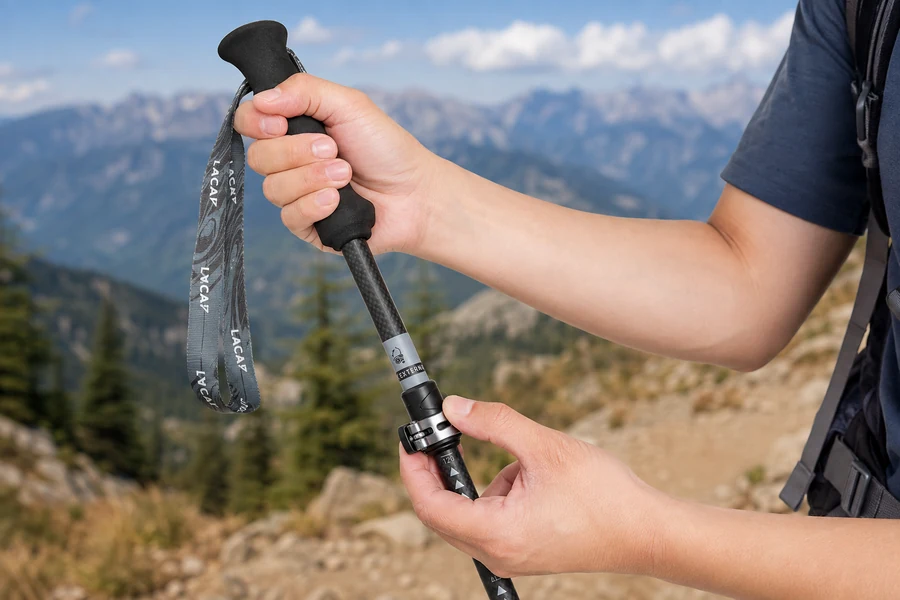
Many Telescopic Trekking Poles use more than one adjustable shaft section.
Do not extend one section excessively while leaving the others almost completely collapsed unless the product instructions specifically require it.
Balanced adjustment helps maintain:
Every section should remain within its designed adjustment range.
Many adjustable trekking poles include a STOP, MAX, or similar safety mark on the shaft.
This mark indicates the maximum designed extension for that section.
Important: Never use the pole with the safe extension mark exposed beyond the upper shaft section.
Overextension can reduce:
The maximum usable length is therefore determined by the product structure, not simply by how far the shaft can be pulled out.
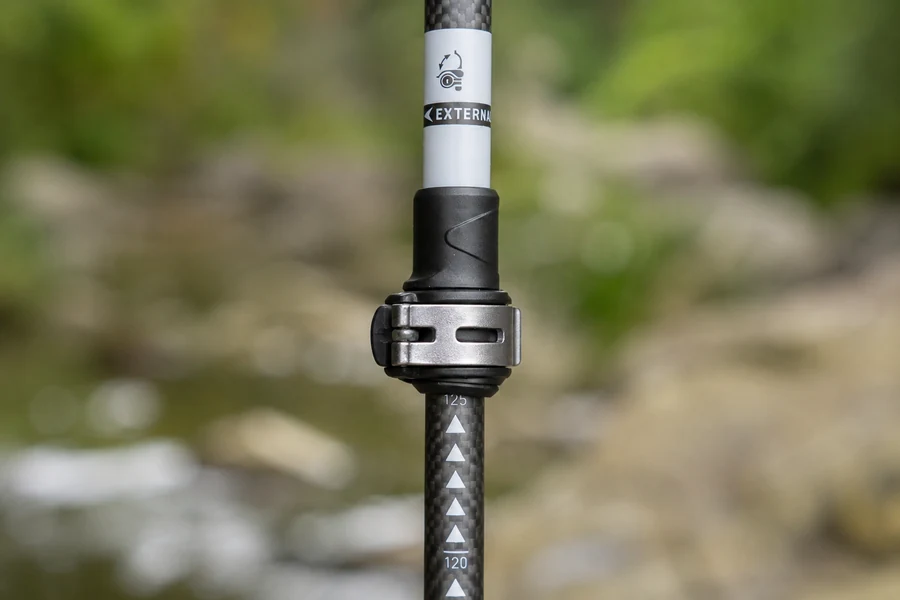
Folding Trekking Poles should be fully assembled before the Working Length is adjusted.
The folding structure should always be fully assembled before the length is adjusted.
Fixed-Length Folding Trekking Poles normally do not require Working Length adjustment.
The user only needs to unfold the sections, fully engage the internal structure, and confirm that every joint is correctly seated.
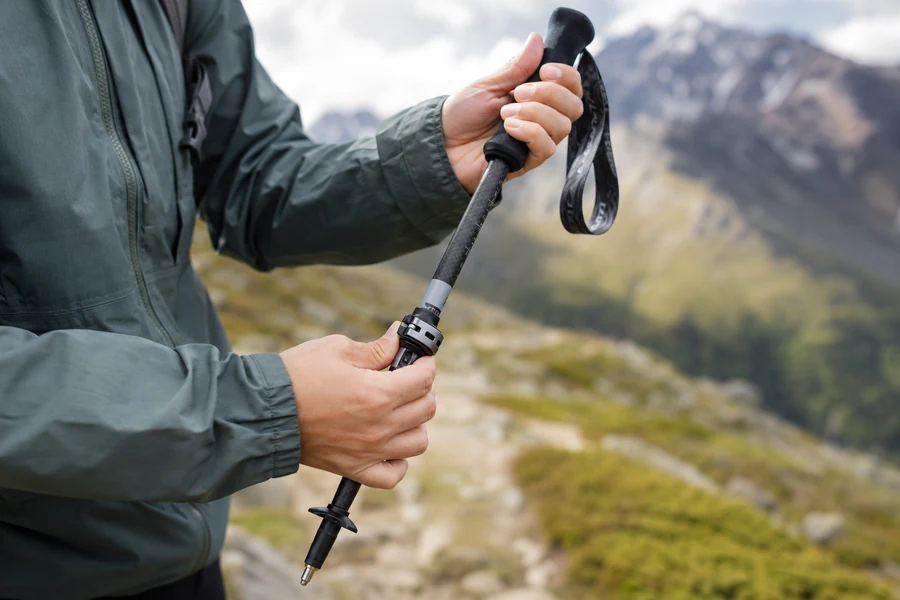
A Locking System should be secure without being overtightened.
A correct adjustment means:
A lock that is too loose may allow the shaft to move under load, while excessive tightening can make operation difficult and place unnecessary stress on components.
Key Point: Secure does not mean overtightened.
After adjustment, perform a quick inspection.
Apply light downward pressure to confirm that the shafts remain locked.
Recheck the adjustment when:
A quick inspection before use can help identify a loose lock or incorrectly seated section.
For brands, importers, distributors, and retailers, the adjustment system should be evaluated together with the overall pole structure.
Important factors include:
A good adjustment system should be easy to operate, easy to read, and secure throughout the intended Working Length range.
XATP supports OEM and ODM development for different trekking pole adjustment systems and structures.
Available options include:
Brands, importers, distributors, and retailers can review XATP’s Custom Trekking Pole OEM and ODM Services for additional project information.
To adjust trekking poles correctly, first identify the Locking System, keep every shaft section within its safe adjustment range, secure each lock, and test the pole before use.
Correct adjustment is not only about reaching the required Working Length. It must also maintain sufficient shaft overlap, reliable locking performance, and a stable overall structure.
Manufacturing, R&D and production support for global trekking pole projects.


