


XATP 2025 Ultra Light Running Poles
October 19, 2025
 0574-65288269
 sales@ningbocomo.com


Yes. Ski poles can be used for hiking in some situations, especially for short walks, snow-covered trails, or occasional use. However, they are not a direct substitute for dedicated Trekking Poles.
The main differences are usually found in length adjustment, Grip design, Wrist Strap configuration, Basket size, Pole Tip structure, and packability. For regular hiking, backpacking, and variable terrain, trekking poles are generally more practical.
Although the two products look similar, they are designed around different activities.
| Feature | Ski Poles | Trekking Poles |
|---|---|---|
| Primary Use | Skiing and snow conditions | Hiking and trekking |
| Length | Often Fixed-Length or limited adjustment | Commonly adjustable |
| Packed Length | Usually longer | Telescopic or Folding options |
| Basket | Often larger | Usually smaller for trails |
| Pole Tip | Optimized for skiing and winter surfaces | Designed for varied trail surfaces |
| Grip | Ski-oriented | Hiking-oriented |
| Wrist Strap | Ski-oriented | Designed for repeated walking movement |
| Packability | Usually limited | Often a major design priority |
These are general differences rather than absolute rules. Some ski poles are adjustable, while some trekking poles are Fixed-Length.
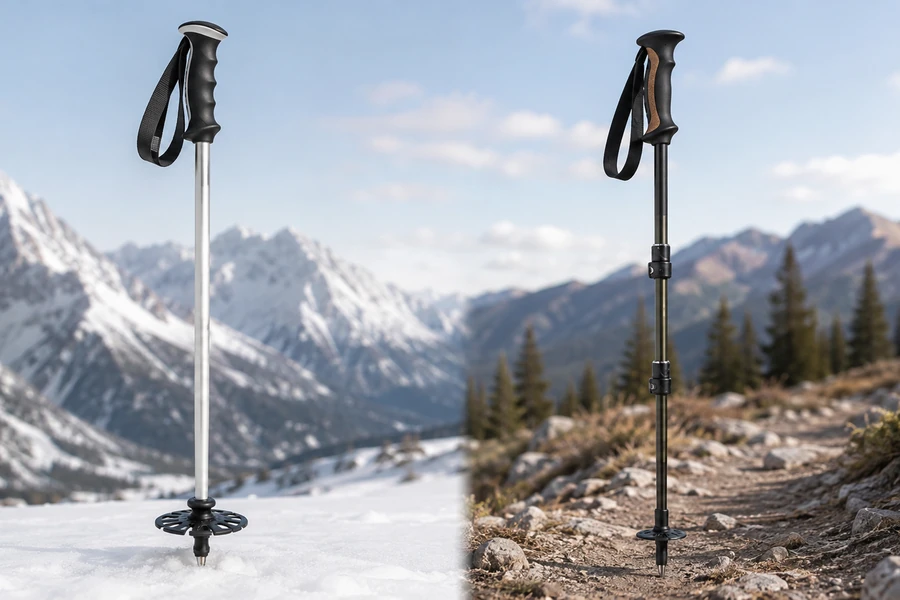
Many Alpine Ski Poles use a Fixed-Length shaft selected according to the skier's height.
Trekking Poles are commonly available in Telescopic or adjustable configurations, allowing the user to change Working Length according to body size, terrain, and activity.
A Fixed-Length ski pole can still work for hiking if its length suits the user. The main disadvantage is reduced flexibility, particularly when terrain changes or the poles need to be packed for transport.
They can be, especially for shorter walks.
However, Trekking Pole Grips are designed around prolonged walking and repeated pole placement. Common materials include EVA Foam, Natural Cork, TPE, and molded plastics. Some designs also include an extended Grip that allows the user to change hand position without adjusting the shaft.
Ski Pole Grips are more closely optimized for skiing technique, gloves, and winter use. Whether they remain comfortable during a long hike depends on the Grip shape, material, and the user's hand.
Both products commonly use a Wrist Strap, but their design goals may differ.
Trekking Pole Wrist Straps are intended for repeated walking movement and prolonged use. Ski Pole straps may be designed around winter gloves, skiing technique, or specific Grip systems.
A ski Wrist Strap can still function during hiking, but it may not provide the same ergonomics as a strap developed specifically for trekking.
Basket size is one of the most visible differences.
Ski poles often use larger Baskets to reduce how deeply the pole sinks into snow. On dry trails, a large Basket may be unnecessary and can catch on rocks, roots, vegetation, or narrow gaps.
Trekking Poles generally use smaller trail Baskets, while larger Snow Baskets can be installed when winter conditions require them.
Key Point: a large ski Basket may be useful for snow hiking, but it can be less convenient on ordinary dry trails.
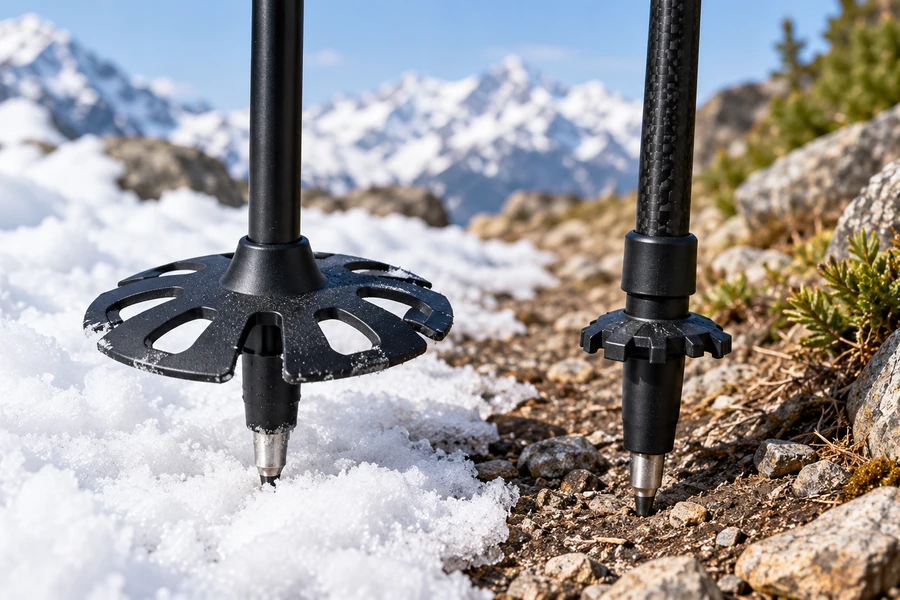
A ski Pole Tip may still work on soil, rock, snow, or ice, but Trekking Pole systems are generally designed for greater surface versatility.
Depending on the model, trekking poles may support different Baskets, replaceable Pole Tips, or Tip Pads for harder surfaces.
Suitability therefore depends on the actual Pole Tip geometry, material, Basket interface, and trail conditions rather than the product name alone.
Not necessarily. A ski pole is not automatically heavier than a trekking pole.
Finished weight depends on:
The more important difference is often packability. Many Trekking Pole designs are developed so they can be shortened or folded when attached to or stored in a backpack.
Yes, particularly for occasional hiking.
Alpine Ski Poles may work well for short walks, snow-covered routes, and relatively simple terrain when the pole length is appropriate.
Their main limitations are often Fixed-Length construction, larger Baskets, longer Packed Length, and ski-specific Grip and Wrist Strap configurations.
For regular hiking, a dedicated Trekking Pole is usually more versatile.
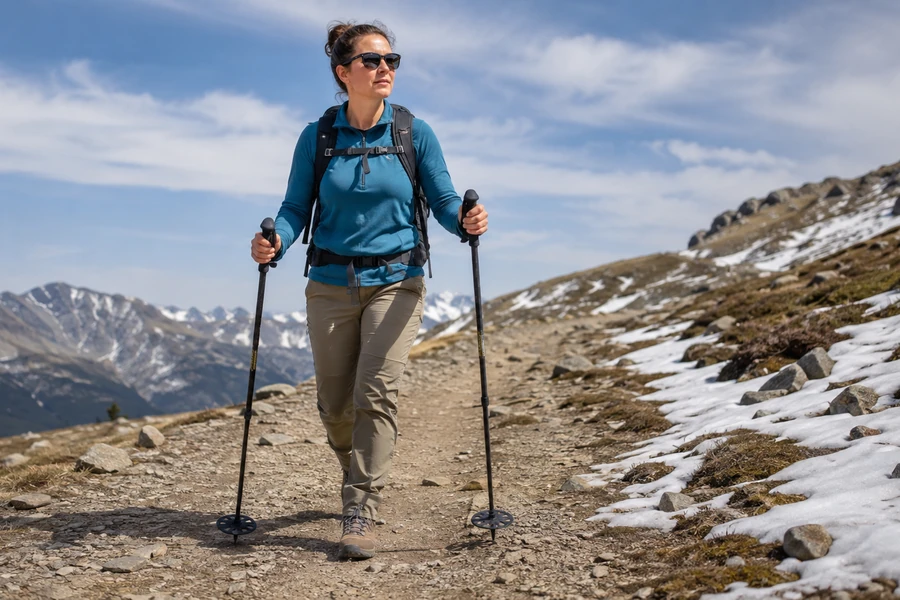
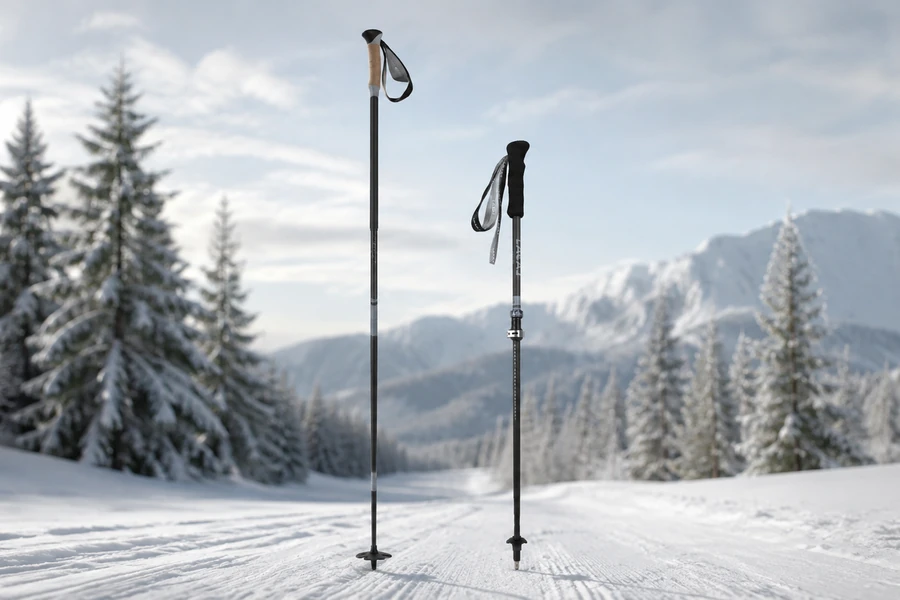
Cross-Country Ski Poles are generally less suitable as direct trekking pole substitutes.
They are often longer because they are designed to generate propulsion during cross-country skiing. Grip, Wrist Strap, Basket, and Pole Tip systems may also be more specialized.
Their additional length can make them less natural to use on ordinary forest or mountain trails.
Ski poles can be a practical temporary option when:
For occasional use, there may be little reason to purchase another pair immediately.
Dedicated trekking poles are generally more appropriate for:
Telescopic Trekking Poles and Folding Trekking Poles are particularly useful when poles need to alternate between active use and backpack storage.
Only to a limited extent.
Depending on the product design, components such as the Basket, Tip Pad, or Wrist Strap may be replaceable.
However, changing accessories does not change the fundamental construction of the pole. A Fixed-Length ski shaft remains Fixed-Length, while its Grip geometry and Packed Length also remain unchanged.
Important: replacing a large ski Basket with a smaller one can make the pole more convenient on trails, but it does not fully convert it into a Trekking Pole.
For brands, importers, distributors, and retailers, Alpine Ski Poles, Cross-Country Ski Poles, and Trekking Poles should be treated as separate product categories even when they use similar materials.
Important specifications include:
A product intended for skiing may require different component specifications from one developed for regular hiking, even when the shafts appear similar.
XATP supports OEM and ODM Trekking and Ski Pole Development across multiple pole categories, including Trekking Poles, Alpine Ski Poles, and Cross-Country Ski Poles.
Development options include Fixed-Length, Telescopic, and Folding structures; Aluminum and Carbon Fiber shafts; customized Grips and Wrist Straps; different Basket, Pole Tip, and Tip Pad configurations; prototype development; packaging customization; and bulk production.
This allows the pole structure and components to be selected according to the intended activity rather than relying on one design for multiple uses.
Ski poles can be used as trekking poles for occasional or temporary hiking, especially on snow-covered trails or simple routes.
For regular hiking, dedicated trekking poles are usually more practical because they offer greater flexibility in length adjustment, packability, Grip design, Basket selection, and trail-specific components.
The best choice depends on terrain, frequency of use, and the actual pole structure—not simply whether the product is labeled a ski pole or trekking pole.
Manufacturing, R&D and production support for global trekking pole projects.


